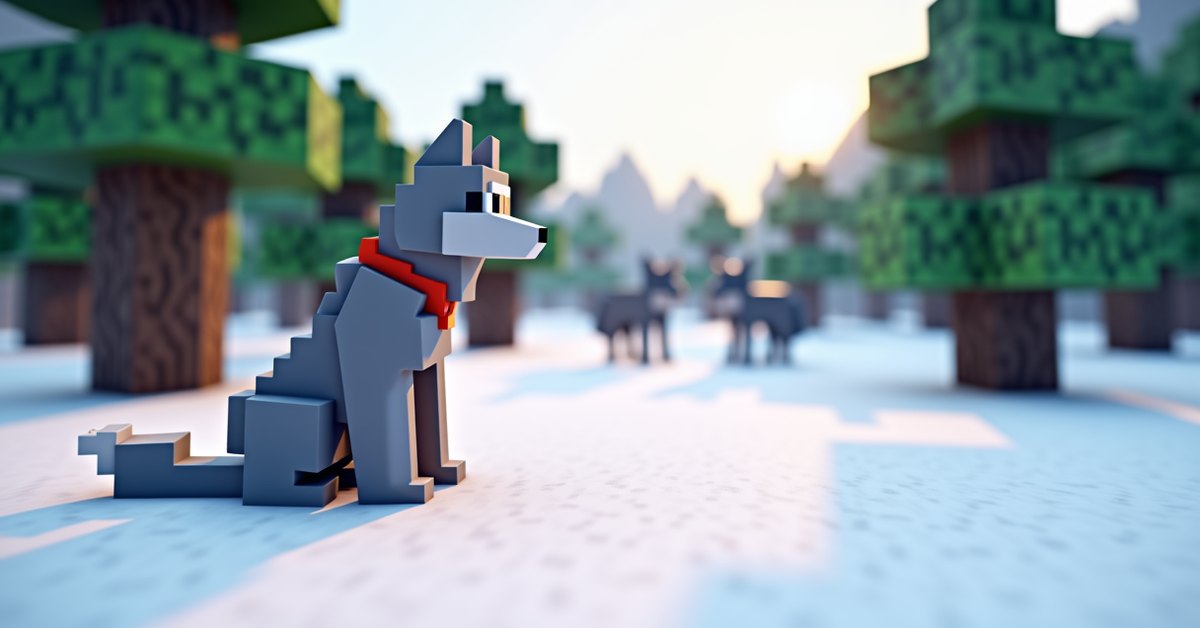
What a wolf is
A wolf is a neutral mob in Minecraft. Left alone, it wanders in packs and ignores you. Attack one and the whole pack turns on you at once, so a single bad hit can put four sets of teeth on your heels.
The reason most players seek wolves out is simple: you can tame one into a dog. A tamed wolf follows you, fights alongside you, and teleports to your side when you travel. It is the closest thing Minecraft has to a loyal pet, and it costs nothing but a handful of bones.
This guide covers where wolves spawn, how to tame one, how to keep it healthy, how to breed more, and how the wolf armor added in the 2024 updates works.
Where to find wolves
Wolves spawn naturally in packs of four, and they stick to colder, wooded biomes. Look in taigas, forests, groves, and the various old growth taiga types. They do not spawn in deserts, jungles proper, or the Nether.
Since the wolf variant update, the coat a wolf wears depends on the biome it spawned in. There are nine variants, and each one is tied to a specific biome. The classic gray wolf, now called the pale variant, comes from regular taigas. If you want a particular look, you have to travel to the matching biome and tame a wolf there.
| Variant | Biome it spawns in |
|---|---|
| Pale (the classic gray) | Taiga |
| Woods | Forest |
| Ashen | Snowy taiga |
| Black | Old growth pine taiga |
| Chestnut | Old growth spruce taiga |
| Rusty | Sparse jungle |
| Snowy | Grove |
| Spotted | Savanna plateau |
| Striped | Wooded badlands |
The variant is only a skin. A spotted wolf and a black wolf tame the same way, fight the same way, and have the same health. Coat aside, they behave identically.
How to tame a wolf
You tame a wolf with bones, which you get from killing skeletons. Walk up to an untamed wolf, hold bones, and use them on the animal. Each bone has a chance to work, and taming is random, so keep a stack on hand. It usually takes several bones before one sticks.
When the taming succeeds, hearts pop above the wolf and a red collar appears around its neck. That collar is the sign it now belongs to you. A tamed wolf stands up, follows you around, and will not attack you no matter what.
A few things make taming easier. Corner the wolf against terrain so it cannot pace away between bone feedings, and clear any nearby hostile mobs first. An angry pack cannot be tamed while it is attacking you, so approach calm wolves only.
Taking care of your dog
A wild wolf has 4 hearts of health. The moment you tame it, that jumps to 10 hearts, so your dog is far sturdier than the animal you found in the wild.
You can read a wolf’s health at a glance by looking at its tail. A healthy dog holds its tail high. As it takes damage, the tail droops lower and lower, so a tail hanging near the ground means the wolf is badly hurt.
Feeding and healing
To heal a hurt wolf, feed it meat. Any meat works, raw or cooked, including beef, chicken, mutton, porkchops, rabbit, and rotten flesh. Unlike you, a wolf can eat raw chicken and rotten flesh with no ill effect. Each piece restores some health, and feeding continues until the tail is back up.
Wolves do not eat bread, carrots, or other crops. If your dog will not take an item, it is because the item is not meat.
Sitting, standing, and teleporting
Use the interact button on your dog to toggle it between sitting and standing. A sitting wolf stays put and waits for you, which is how you leave a dog guarding your base or park it somewhere safe before a risky fight.
A standing wolf follows you. When you get more than about 12 blocks away and there is a clear spot near you, the wolf teleports to catch up. This is why a following dog rarely gets left behind on foot. It will not teleport if it is sitting, if it is leashed, or if there is nowhere valid to land, which is how dogs sometimes drown or fall into lava when you cross dangerous ground. Make your dog sit before you do anything that might get it killed.
Collar colors
The default collar is red, but you can change it. Use any of the 16 dyes on a tamed wolf and its collar takes that color. This has no effect on gameplay and exists purely so you can tell your dogs apart or match them to a build.
Breeding wolves
Two tamed wolves will breed if you feed each of them meat while they are at full health. Hearts appear, and a puppy spawns already tamed to you. The puppy is a smaller version of an adult and grows up over time.
Breeding is the fast way to build a pack once you have your first pair. The puppy’s owner is whoever bred the parents, so a bred litter is yours from birth with no bones required. Keep both parents topped up on meat, since a wounded wolf will eat to heal instead of entering breeding mode.
Wolf armor
Wolf armor lets you protect a dog the way a chestplate protects you. You craft it from armadillo scutes, which drop when an armadillo sheds. You cannot mine or trade for the armor, so a small armadillo farm in a savanna or badlands is worth setting up if you want to outfit a pack.
Fit the armor by using it on a tamed wolf. Once on, it soaks up a share of incoming damage, and the armor itself shows cracks as it wears down. To repair it, feed the wolf armadillo scutes while the armor is equipped. You can dye wolf armor with any dye for a custom color, and wash that dye back off in a cauldron of water.
To take the armor off without hurting your dog, use shears on the wolf. The armor drops on the ground for you to pick up and reuse.
How wolves fight
Tamed wolves attack whatever you attack. Hit a zombie and your pack piles on. This makes a group of dogs a strong early escort, since they tank hits and deal steady damage while you keep your distance.
They also defend you on their own. If a mob hurts you, nearby dogs will turn on it without waiting for a command. Your own hits never damage your wolves, so you can swing freely in a crowd without worrying about friendly fire.
Wild wolves have their own targets. On their own, untamed wolves hunt sheep, rabbits, foxes, baby turtles, and skeletons. A pack that spots a skeleton will chase it down, which can clear a threat for you or, if you are not careful, wander your future pet into danger before you tame it.
An angry wolf is easy to spot. Its eyes turn red, its fur bristles, and it growls with its tail raised straight out. Wild wolves stay angry until whatever provoked them is dead or out of reach, so if you accidentally hit one, expect the pack to commit.
Tips and common mistakes
Bring more bones than you think you need. Taming is a coin flip each time, and running dry two bones short means walking all the way back for more skeletons.
Make your dog sit before you dig straight down, cross lava, or fight in tight spaces. A following dog with no safe teleport spot is the single most common way players lose a pet.
Do not hit your own wolf to test anything. You cannot damage it, but in older habits players sometimes attack near their dogs and pull aggro from a wild pack instead.
Keep a few pieces of cheap meat like rotten flesh in your inventory when adventuring with dogs. It is worthless to you and heals them fine, so it doubles as a first aid kit for the pack.
Frequently asked questions
How many bones does it take to tame a wolf?
There is no fixed number. Each bone has a chance to work, and it is random, so it can take one bone or a dozen. Carry a full stack to be safe.
Can wolves eat fish?
Wolves heal from meat like beef, chicken, mutton, porkchops, rabbit, and rotten flesh. Stick to those to top up a hurt dog rather than relying on fish.
Why does my wolf keep dying?
Almost always because it was standing and followed you into danger, or teleported into lava or a drop. Make your dog sit before anything risky, and heal it with meat when its tail droops.
How do I change my wolf’s collar color?
Use any of the 16 dyes on a tamed wolf. The collar takes that color immediately, and you can re-dye it as often as you like.
Can I stop my wolf from teleporting to me?
Yes. Make it sit, or attach a lead. A sitting or leashed wolf stays where you put it instead of following and teleporting.
Do all wolf variants behave the same?
Yes. The nine variants differ only in their coat. Health, taming, breeding, and combat are identical across all of them.
One last thing
A single dog is handy, but a pack changes how you play. Tame two wolves, breed a litter, fit them with armor, and you have an escort that can hold its own against most early threats while you focus on the fight. Start with one taiga wolf and a stack of bones, and build from there.