What is dead horn coral?
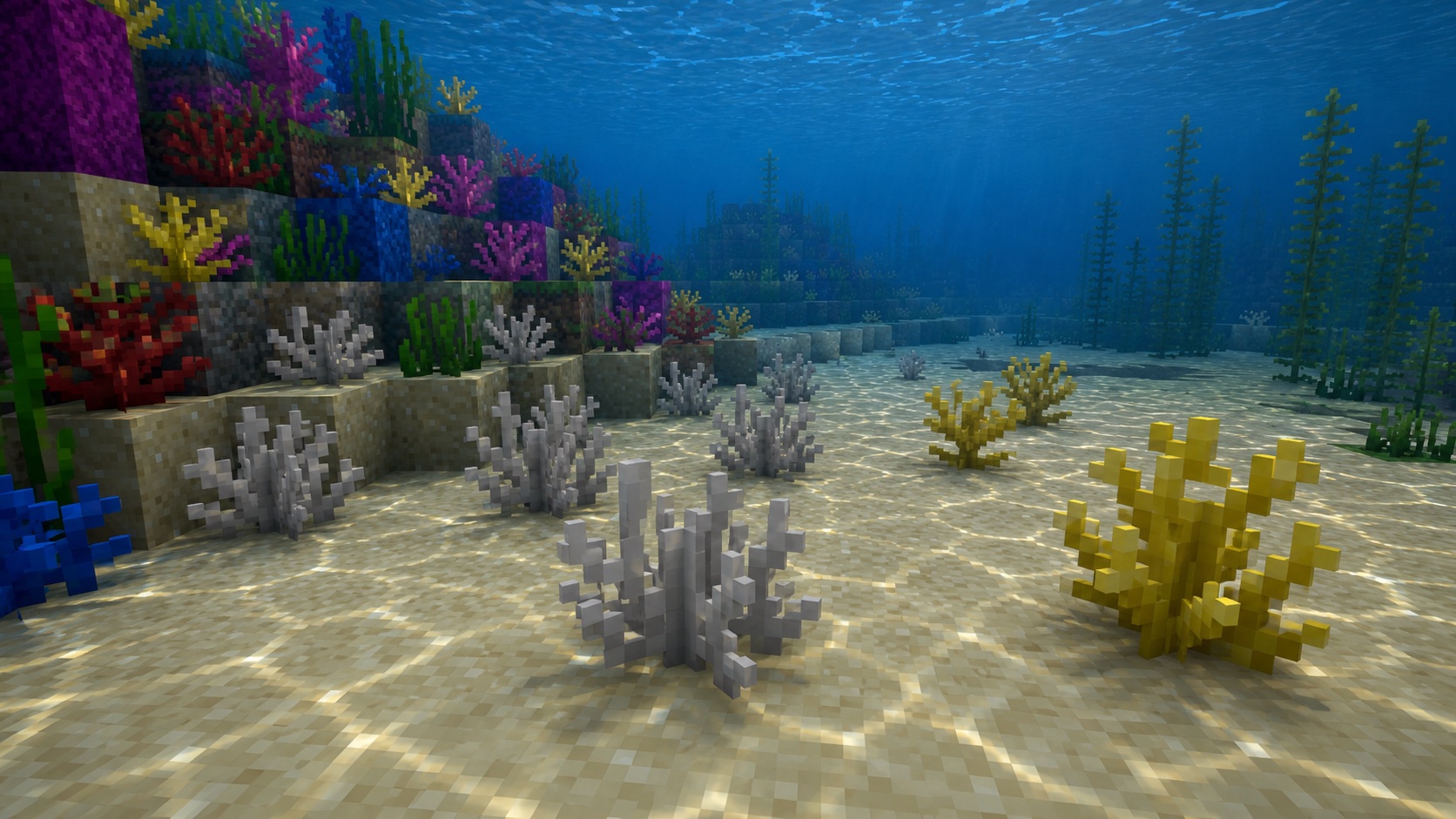
Dead horn coral is the bleached version of horn coral, the small yellow plant-shaped coral that grows in warm ocean reefs. When a live horn coral spends more than a moment outside water, it dies and turns into dead horn coral. The shape stays the same; the color washes out to a chalky gray.
The block is decoration only. It does not power redstone, light a room, feed a furnace, or grow back if you place it in water. The reason to keep some around is to put it in a build, especially a build where you want a reef look without the upkeep that live coral needs.
You see dead horn coral in two places. Some generates naturally near warm ocean reefs where the live coral has been exposed to air. The rest is made by accident: a player mines horn coral, places it on land, and it dies before they can keep it alive.
How to get dead horn coral
There are two paths.
Find it already dead
Search the edges of warm ocean reefs. Look for the gray, washed-out plants poking out of sand or stone where the reef breaks the waterline. They are not common, but they are there. Beaches next to a reef are a good second place to check, since corals sometimes generate just above the high-water mark.
Make it from live horn coral
This is the more reliable method. Mine live horn coral with a Silk Touch pickaxe so the live plant drops to the floor as an item. Pick it up. Place it on a block in the open air, with no water adjacent. After a short delay (around 60 game ticks, roughly 3 seconds), the coral runs through one random tick check, fails it, and turns into dead horn coral.
From that point on, the rules change. You can mine the dead block without Silk Touch. Any pickaxe works; wood is fine.
Mining dead horn coral
You need a pickaxe to get the drop. With bare hands the block breaks but nothing comes out. With any tier of pickaxe, including wooden, the dead horn coral pops as an item you can pick up. There is no Fortune effect, no Silk Touch requirement, no special tool tier. The block itself has zero hardness, so the actual mining is fast.
How dead horn coral works
Once dead, it stays dead. Putting a dead coral back in water does not bring it back to life. The block is decoration only: no redstone signal, no light output, no fuel value in furnaces, and no growth over time.
The block has no collision, so you walk through it the same way you walk through tall grass. Mobs do not get blocked by it either, which can matter if you are using it on the floor of a base. Light passes through cleanly, since it is a transparent block.
Dead horn coral can be waterlogged. Place it, right-click with a water bucket, and the block becomes waterlogged the same way fences and stairs can be. That is useful for underwater builds where you want the coral to look submerged without losing a separate water-source block to the wall.
Live horn coral vs dead horn coral
The two share a shape but behave differently. Live horn coral needs water in at least one adjacent block at all times. Lose all the water and the live coral dies on the next random tick. Dead horn coral has no such requirement; it sits anywhere you place it.
Live horn coral requires a Silk Touch pickaxe to drop the plant when mined. Dead horn coral drops with any pickaxe. Color is the visual giveaway: live horn coral is a bright mustard yellow, while dead horn coral is washed-out gray with the same plant shape.
Building with dead horn coral
Dead horn coral is the cleanest way to add reef detail to a build that lives above water. A short list of patterns players actually use:
- Bleached reef dioramas, where the dead corals tell a story of an ocean that dried up over sand and gravel.
- Coastal mansions and lighthouses, where dead coral around the base reads as washed-up reef material.
- Pirate or hunter trophy rooms, where the bleached coral reads like preserved specimens on a shelf or in a jar.
- Aquarium edges, where dead coral marks the boundary outside the water area without losing the marine theme.
Because dead horn coral does not need water, you can place it anywhere a regular plant goes: on top of dirt, sand, gravel, stone, or any other full block. It does not survive on glass, slabs, or other partial-top blocks. If you want it floating in midair, you have to put a block under it.
Color-wise, dead horn coral pairs well with sand, sandstone, gravel, deepslate, and any of the other dead corals. The chalky gray reads as bone or pale stone in builds, which is why it slots into desert ruins as easily as it slots into a reef.
Dead horn coral vs the other dead corals
There are five coral types in Minecraft: tube (blue), brain (pink), bubble (purple), fire (red), and horn (yellow). Each one has a dead variant with the same shape and a similar washed-out gray. Horn is the smallest of the five and the easiest to fit into tight builds, because the shape is lower and more compact than tube or brain. If you want a fan instead of the upright plant, dead horn coral fan is the wall- or floor-mounted version of the same block.
Tips and common mistakes
The mistake most players make with horn coral is killing the live version by accident. If you want it alive in your build, place it underwater first, then never break the water source. A coral plant counts “water in at least one of the four horizontally adjacent blocks or directly above” as alive. Lose all four sides and the top at the same time, and the coral dies on the next random tick.
If you only want the dead version, the simpler workflow is to place a live horn coral on land and wait three seconds, then mine the dead result with a wood pickaxe. You do not need Silk Touch for any part of that process if you start with a live plant from a creative inventory or a friend.
One more pitfall: water currents. Coral fans on the wall of an underwater build can pop off if the water flow shifts in older versions of the game. Waterlogging the fan instead of relying on a water source nearby is the safer move. The upright plant version is fine either way.
Java vs Bedrock differences
The block behaves the same in Java and Bedrock for the basics. The main practical differences are around how often you find dead horn coral naturally. Bedrock generation tends to expose more reef tops to air, so above-water dead coral shows up more often in Bedrock worlds. Java reefs sit a little deeper, so most of the dead coral you collect on Java tends to be coral you killed yourself.
The block ID is the same on both editions: dead_horn_coral. The fan version is dead_horn_coral_fan. Commands, datapack references, and resource pack file paths use those IDs without any prefix changes.
Frequently asked questions
Can dead horn coral come back to life?
No. Once a coral plant dies in Minecraft, it stays dead. Placing it back in water does nothing. If you want a live reef, start with live coral that you keep submerged from the moment it leaves your inventory until the moment it sits in the wall.
Do you need Silk Touch to mine dead horn coral?
No. Any pickaxe drops it. Silk Touch is only needed for the live version. The dead version mines like a normal block, just with a pickaxe instead of bare hands.
Can dead horn coral be waterlogged?
Yes. Right-click it with a water bucket and the block becomes waterlogged. This lets you place dead horn coral in an underwater build that looks alive, without the upkeep that real live coral needs.
Where does dead horn coral spawn naturally?
In warm ocean biomes, near coral reefs, especially in spots where the reef pokes above the water. You can also find it on beaches next to those reefs, where individual coral plants generated just above the waterline.
Does dead horn coral drop anything special?
No. It drops itself when mined with a pickaxe. No bonemeal, no dye, no special item. It is purely decorative.
Will dead horn coral block water flow?
No. Like all coral plants, it has no collision and does not stop water from passing through. Water flows around and past it as if the block were not there.
What is the difference between dead horn coral and the dead horn coral fan?
The fan is the wall-mounted or floor-mounted version of the same block. It comes from horn coral fan rather than the upright plant. Same color, same drop rules, same waterlogging rules; just a different shape.
The point of dead horn coral
If live coral is the high-maintenance fish-tank decor, dead horn coral is the version you set up once and forget. It loses the bright color, but you keep the shape, and you stop worrying about whether the water source two blocks away is still there. For most reef builds that sit above the surface, the dead version is the one you actually want.