What deepslate iron ore is
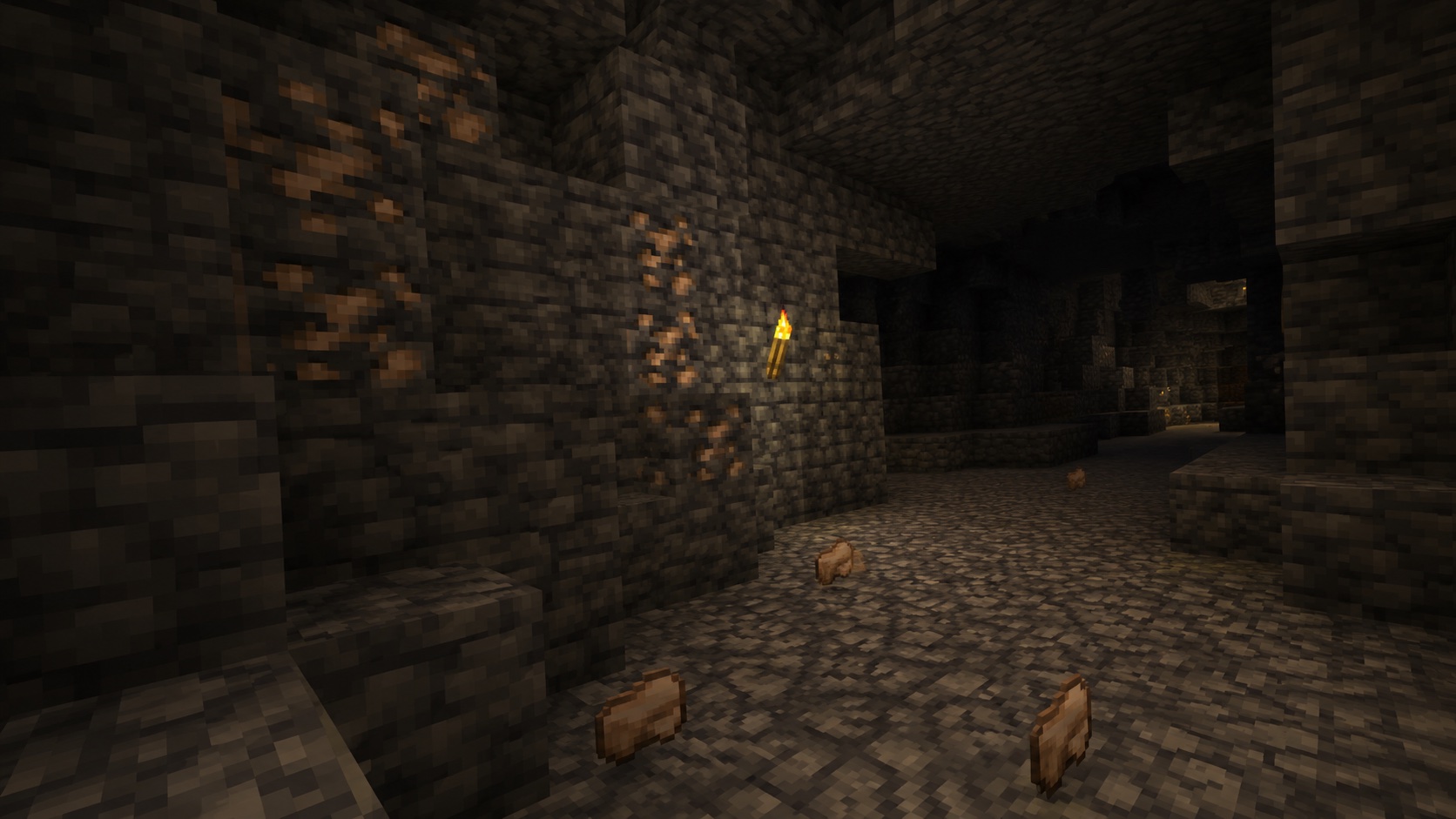
Deepslate iron ore is the version of iron ore that appears inside the deepslate layer, the dark stone that fills the lower part of the Overworld. It looks like a deepslate block with rusty orange specks running through it, and it works the same way as the lighter cobblestone-colored iron ore: you mine it, you smelt the drop, you get iron ingots.
The deepslate variant generates wherever an iron vein crosses into the deepslate band, which sits roughly from Y=0 down to bedrock. Above that, the same vein continues as regular iron ore in stone. The two share one ore generator behind the scenes; the wrapper block just changes based on what is around it.
If you have spent any time mining around Y=-10 to Y=-50, you have seen far more deepslate iron than the lighter kind, and there is a reason for that.
Where deepslate iron ore spawns
Iron in Minecraft generates in three overlapping bands. The one most players hit while caving is the lower band, a triangle distribution that peaks at Y=16 and tapers off in both directions down to Y=-64 and up to Y=72. Because deepslate replaces stone below Y=0 (with a noisy transition zone from Y=0 down to Y=-8), iron veins in the lower band that land underneath this boundary end up as deepslate iron ore instead.
The practical result: from about Y=-8 down to bedrock, every iron you mine is the deepslate version. In the transition zone from Y=-8 up to Y=0, you can find either, depending on whether that particular block ended up as stone or deepslate when the chunk generated. Above Y=0 it is all the regular stone variant.
The biome does not change anything for iron itself. It generates the same way in plains, jungle, desert, swamp, ocean floors, and underground in all biomes. What does matter is access. Caves near Y=-30 to Y=-50, abandoned mineshafts in deep regions, and amethyst geode chambers all expose deepslate ore faces you can mine without digging a fresh shaft.
The pickaxe you need
Deepslate iron ore requires at least a stone pickaxe to drop anything. A wood pickaxe breaks the block, but the drop will not register, which is the same rule as regular iron ore.
The hardness value is higher than regular iron, though. Stone iron ore has a hardness of 3, and the deepslate version has a hardness of 4.5. That difference adds up. A stone pickaxe takes around 1.5 seconds per deepslate iron ore block versus about 1 second for the stone version. Move up to iron, diamond, or netherite and the gap shrinks, but the deepslate variant is always slower than the stone one with the same tool.
Efficiency on the pickaxe and a Haste beacon (or a conduit if you are underwater) will close the gap further. With Efficiency V and Haste II, both ore types break instantly.
What it drops
Mined without Silk Touch, deepslate iron ore drops one raw iron. Raw iron is the chunk-of-rock item that was added in version 1.17; it is not an ingot yet. To turn it into a usable iron ingot, smelt it in a furnace, blast furnace, or campfire (campfire works but it is slow and only useful in early game).
Fortune raises the drop count. Fortune I gives a chance for two raw iron per block, Fortune II up to three, and Fortune III up to four. The averages, rounded:
- No Fortune: 1.0 raw iron per block
- Fortune I: 1.33 raw iron per block
- Fortune II: 1.75 raw iron per block
- Fortune III: 2.2 raw iron per block
Mined with Silk Touch, the block drops itself as deepslate iron ore. That is useful if you want to move the block to a different location for a display piece or a creative build, but for actual iron production you almost always want Fortune.
The XP drop is the same as the stone version: 0 to 2 experience points per block when mined without Silk Touch. Smelting raw iron gives a small XP bonus when you take the ingot out of the furnace.
Smelting and what to do with the iron
Iron ingots are the most useful mid-tier resource in the game. Almost everything in the survival progression curve runs through them:
- Iron tools and armor
- Shields, anvils, and cauldrons
- Buckets, shears, flint and steel
- Hoppers, minecarts, rails, and pistons
- Iron blocks (9 ingots), used as crafting material and as a beacon base
One iron block is 9 ingots, which is 9 raw iron, which (without Fortune) is 9 deepslate iron ore. The conversion ratio is one-to-one through every step.
If you are running a furnace bank, raw iron stacks to 64, so you can fill a single hopper-into-furnace line for a long mining session. A blast furnace smelts at double speed, uses half the fuel per item, and is the right call once you have one set up.
Mining strategy and tips
A few things to keep in mind before you start digging:
Strip mine at Y=-54. This is the iron ore sweet spot below the deepslate boundary. You are still inside the lower triangle distribution (peak at Y=16, but the distribution stretches all the way down), and you are below the diamond and gold cutoffs as well. A 2-block-high tunnel with branches every 3 blocks will expose iron, gold, redstone, and lapis on the same pass.
Learn the speckle pattern. Deepslate iron ore has a warm-toned speckle that stands out against the cool gray deepslate background. Once your eyes adjust, you can pick it out from across a cave room.
Do not waste Silk Touch on iron. Iron production wants Fortune III. Save Silk Touch for blocks you actually want to keep in their original form, such as coal ore, diamond ore, glowstone, and ice.
Carry a water bucket. Lava lakes are everywhere in the deepslate layer. Pouring water onto lava makes obsidian if it is a source block and cobblestone if it is flowing, and either result keeps you alive long enough to mine what is under it.
Mine ore by hand. Do not TNT iron veins. The explosive drop chance per block is lower than the pickaxe drop, and the block can be destroyed entirely if the explosion is close enough.
Java versus Bedrock
The block itself is identical on both editions. Texture, hardness, drop tables, Fortune behavior, and Y-level distribution all match.
The small differences are in tooling rather than the ore. Bedrock’s mining mechanic registers slightly differently when you swing at block corners, so the feel is a little different even though the timing is the same. Bedrock’s default render distance can also make distant ore harder to spot in deep caves. Neither changes how much iron you end up with per hour, just the feel of getting it.
Frequently asked questions
Is deepslate iron ore worth more than regular iron ore?
The drop is identical: one raw iron per block, same XP, same Fortune scaling. The deepslate version is harder to mine, so per-second yield is slightly lower with a given pickaxe. The value is the same; the friction is higher.
Can you get iron ingots directly from deepslate iron ore?
No. You have to smelt the raw iron drop. The change to raw items in 1.17 means ore blocks no longer drop ingots even with a non-Silk-Touch pickaxe.
What Y-level is best for deepslate iron ore?
Around Y=-54. You will see strong iron rates anywhere from Y=-8 to Y=-58, but Y=-54 also lines up with the diamond peak, so a single strip mine covers both. Go lower and you start hitting bedrock and lava.
Does deepslate iron ore generate in mountains?
No. The mountain iron generator runs above Y=80 and stops well below Y=128. Deepslate does not exist that high. All mountain iron is the regular stone variant.
What is the fastest pickaxe for mining deepslate iron ore?
Netherite with Efficiency V breaks it in under a quarter of a second. Diamond with Efficiency V is almost as fast. For most players, an Efficiency IV iron pickaxe is the practical baseline; it clears veins quickly without burning durability fast.
Why does deepslate iron ore look greenish?
The texture is not actually green. The deepslate background is a cool, slightly blue-gray, and the warm orange-brown iron specks read as green by contrast on most monitors. Compare it side by side with a regular iron ore block and the speckle color is identical; only the background changed.
Can you find deepslate iron ore in the Nether or the End?
No. The Nether has its own ore set (Nether quartz, Nether gold ore, ancient debris) and the End has no native ores at all. Deepslate iron ore is Overworld only.
One last thing
If you have been frustrated mining iron in the deepslate layer, the issue is almost never that iron is rarer down there. It is that the blocks take 50% longer to break with the same pickaxe. Upgrade the tool or add Efficiency before you change your strategy.