What are deepslate tiles?
Deepslate tiles are a decorative block made from deepslate bricks, with a finer, more uniform pattern than the bricks themselves. They share the same dark gray color as raw deepslate but show smaller squares set in a clean grid. Builders use them for floors, walls, courtyards, and anywhere a polished, more “finished” surface fits the build.
The block was added in the 1.17 Caves & Cliffs update along with the rest of the deepslate family. It sits at the end of the crafting chain that starts with cobbled deepslate, runs through polished deepslate and deepslate bricks, and finishes with the tile.
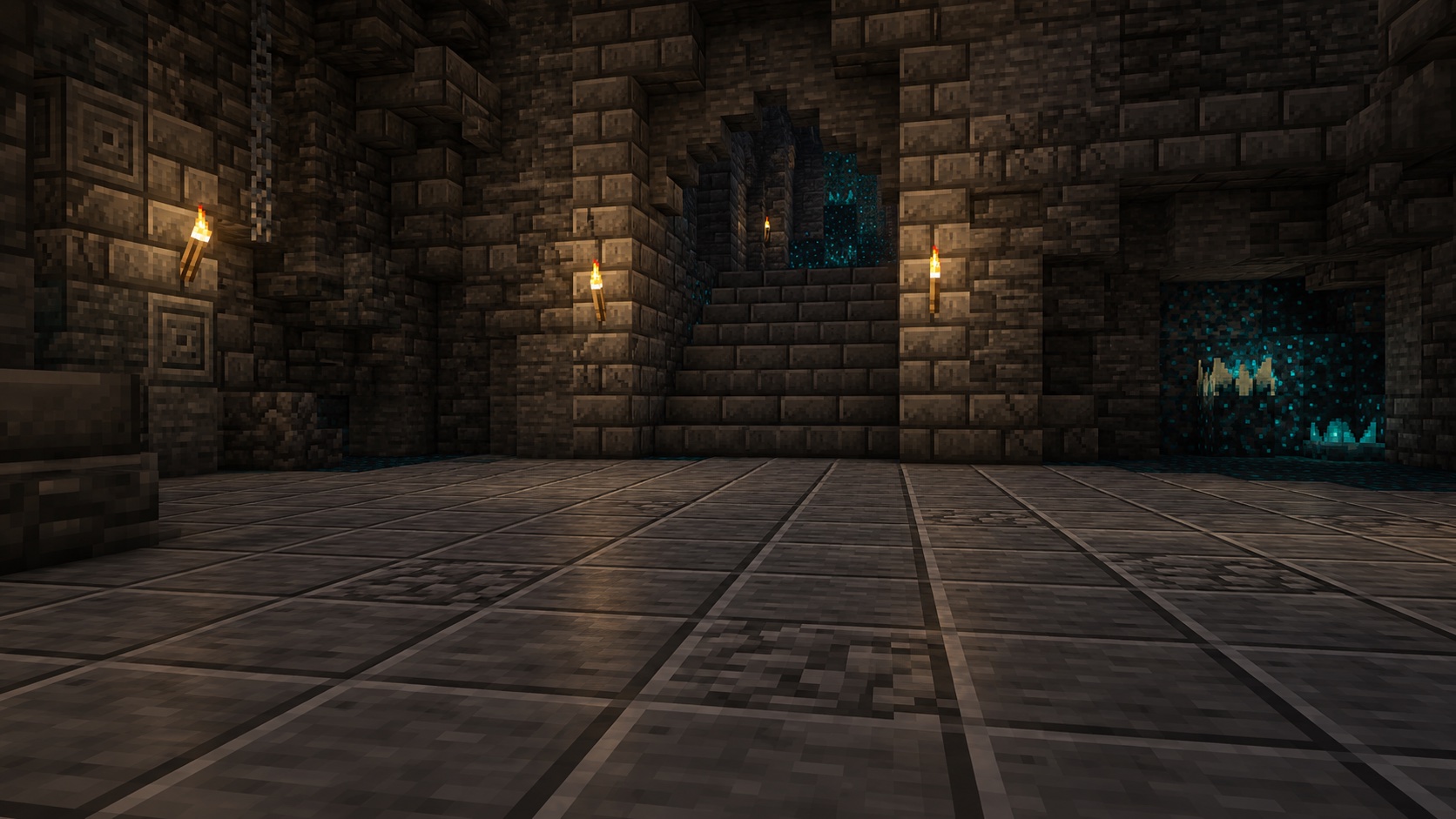
If you have explored an ancient city in the Deep Dark, you have already seen them. They make up a large part of the floor and wall textures inside the structure.
Where do deepslate tiles come from?
Deepslate tiles do not generate in deepslate caves the way regular deepslate or tuff does. They show up in two places naturally: ancient cities and trial chambers. Outside those structures, you craft them yourself.
Ancient cities
Ancient cities sit deep below Y=0 in the Deep Dark biome, typically around Y=-52. The floors, ceilings, and main pillars use deepslate tiles, deepslate bricks, and cracked variants of both. Mining them inside a city is one of the fastest ways to stockpile tiles if you are already there raiding for echo shards and a Swift Sneak enchanted book. Just be careful with the Warden.
Trial chambers
Trial chambers are combat-focused structures added in the 1.21 update. They use deepslate tiles in their architecture, though copper and tuff blocks make up the bulk of the structure. You can mine tiles from there, but the resource trade is less generous than an ancient city, and the rewards from the trial spawners are usually the main reason to be inside one.
How to craft deepslate tiles
There are two ways to make deepslate tiles. The straight crafting-table recipe is fine, but the stonecutter saves a step.
Crafting table recipe
Place four deepslate bricks in a 2×2 square on the crafting grid. That gives you four deepslate tiles. The ratio is one for one by block count, but you have to climb the recipe chain first.
The full chain runs like this:
- Mine deepslate without Silk Touch to get cobbled deepslate.
- Place four cobbled deepslate in a 2×2 grid to get four polished deepslate.
- Place four polished deepslate in a 2×2 grid to get four deepslate bricks.
- Place four deepslate bricks in a 2×2 grid to get four deepslate tiles.
That is a lot of grid time if you want any real quantity, which is where the stonecutter helps.
Stonecutter recipe
The stonecutter produces deepslate tiles directly from cobbled deepslate, polished deepslate, or deepslate bricks at a one-to-one ratio. So if you have a stack of cobbled deepslate and a stonecutter, you can turn it straight into tiles without ever crafting the in-between blocks.
This is the cleanest way to make tiles in bulk. The downside is that you still spend one cobbled deepslate per tile, the same as the crafting chain, so the savings are in clicks and inventory shuffling, not raw materials.
Cracked deepslate tiles
Cracked deepslate tiles come from a furnace. Put a regular deepslate tile in the top slot, add fuel, and you get one cracked deepslate tile out per smelt. They cannot be crafted any other way, so if you want a pile of cracked tiles for a worn look, plan on cooking time and fuel.
Mining deepslate tiles
You can mine deepslate tiles with any pickaxe, but a wooden one is painfully slow. Stone tier or better is what you want in practice. They drop themselves without needing Silk Touch.
Some quick numbers on how they behave in the world:
- Hardness: 3.5
- Blast resistance: 6.0
- Tool: pickaxe (stone or higher recommended)
- Drops: itself, no Silk Touch needed
- Light filtering: full (treated as a solid block)
- Flammable: no
The hardness and blast resistance match the rest of the deepslate brick family. They are tougher to mine than regular stone but identical in blast resistance, which means creepers can still break them. If you need an explosion-proof surface, use obsidian or reinforced deepslate instead.
Variants: stairs, slabs, walls, and cracked
Deepslate tiles come with the usual stair, slab, and wall set, plus the cracked variant. Each has its own crafting and stonecutter recipes.
Deepslate tile stairs
Place six deepslate tiles in the standard stair recipe (three on the bottom row, two on the middle, one on top) to get four stairs. A stonecutter converts one tile into one stair at a time.
Deepslate tile slabs
Place three deepslate tiles in a horizontal row in the crafting grid to get six slabs. The stonecutter ratio is one tile to two slabs.
Deepslate tile walls
Place six tiles in two horizontal rows of three to get six walls. The stonecutter does one for one.
Cracked deepslate tiles
Already covered above: smelt deepslate tiles in a furnace. The cracked version is purely cosmetic and works best when sprinkled into a floor or wall of regular tiles for an aged effect. There are no stair, slab, or wall versions of the cracked tile.
Build ideas and tips
Deepslate tiles are one of the most useful neutral-dark blocks in the game. The texture is detailed enough to read well from a distance but not so busy that it competes with whatever you put on top of it. A few places where they fit naturally:
- Floor tiling for castles, dungeons, and underground hubs.
- Plaza or courtyard surfacing, mixing in cracked tiles for an aged effect.
- Trim and accent bands inside otherwise stone or brick builds.
- Path borders alongside lighter blocks like calcite or diorite for contrast.
- Walls inside ancient-city themed builds, paired with sculk and reinforced deepslate.
The cracked variant blends well with the regular tile in roughly a 1:4 or 1:5 ratio. Too much cracked tile looks deliberately distressed; a little sprinkled in looks like the floor has been there for centuries. Mixing in deepslate bricks in the same palette can read as overdone, so pick one or the other for a given surface and keep it consistent.
Common mistakes
The biggest one is confusing deepslate tiles with deepslate bricks. The textures are similar at a glance, but bricks are larger, rectangular blocks while tiles are smaller squares set in a grid. Most builds want one or the other consistently, not a random mix, because the eye picks up the size difference even when the color is the same.
The other mistake is forgetting the stonecutter exists. Crafting tiles from cobbled deepslate the long way means making polished deepslate, then bricks, then tiles, which is three crafting steps. A stonecutter does it in one click.
Using deepslate tiles in commands
If you are building on a creative server or testing layouts, the relevant block IDs are minecraft:deepslate_tiles for the regular block and minecraft:cracked_deepslate_tiles for the cracked version. The stair, slab, and wall variants follow the same pattern: deepslate_tile_stairs, deepslate_tile_slab, and deepslate_tile_wall. A quick /give @s minecraft:deepslate_tiles 64 nets you a stack instantly.
Java vs. Bedrock
There are no meaningful gameplay differences between Java and Bedrock for deepslate tiles. The recipes, drops, and hardness values match. The only thing worth flagging is that ancient city layouts can vary slightly between editions, but the blocks themselves behave the same way once mined or placed.
Frequently asked questions
What are deepslate tiles used for in Minecraft?
They are a decorative block for building. The dark gray color and tile pattern make them a popular floor and accent block, especially for castles, dungeons, and ancient-city style builds. They have no mechanical function beyond decoration and serving as a solid surface mobs can spawn on if the light level is low enough.
Can deepslate tiles be crafted from regular deepslate?
Yes, through a chain. Mine deepslate without Silk Touch to get cobbled deepslate, then craft it through polished deepslate and deepslate bricks before reaching tiles. A stonecutter can skip all the middle steps and turn cobbled deepslate straight into tiles at one for one.
How do you get cracked deepslate tiles?
Smelt a regular deepslate tile in a furnace. Add any fuel and you get one cracked deepslate tile per smelt. They cannot be made on a crafting table or stonecutter, and they do not come from a separate recipe.
Do deepslate tiles spawn naturally?
Yes, in ancient cities (Deep Dark biome, below Y=0) and in trial chambers added in 1.21. They are not part of normal deepslate cave generation, so finding a vein of plain deepslate underground does not mean tiles are nearby.
What is the difference between deepslate tiles and deepslate bricks?
Both are decorative variants of deepslate, but bricks have larger, rectangular blocks in their texture while tiles have smaller, square blocks set in a grid. Tiles are one crafting step beyond bricks: four deepslate bricks in a 2×2 grid makes four deepslate tiles.
What pickaxe do I need to mine deepslate tiles?
Any pickaxe will work, but stone tier or better is what you will actually want. A wooden pickaxe takes more than a second per block without enchantments, which adds up fast when you are mining a stack.
Can creepers blow up deepslate tiles?
Yes. Their blast resistance is 6.0, the same as stone, so a creeper explosion can break them. For an explosion-resistant surface, use obsidian or reinforced deepslate.
Are cracked deepslate tiles found in ancient cities?
Yes. Ancient city floors and pillars use a mix of deepslate bricks, cracked deepslate bricks, deepslate tiles, and cracked deepslate tiles. The cracked variants give the structure its aged, ruined feel.
Should you stockpile deepslate tiles?
If you build at all below sea level or in the Deep Dark biome, yes. Set up a stonecutter near your cobbled deepslate storage and a furnace dedicated to cracked tiles, and you will have a steady supply for any project. They are not flashy, but they pull their weight in any build that wants a darker, weathered floor.