What are cracked deepslate tiles?
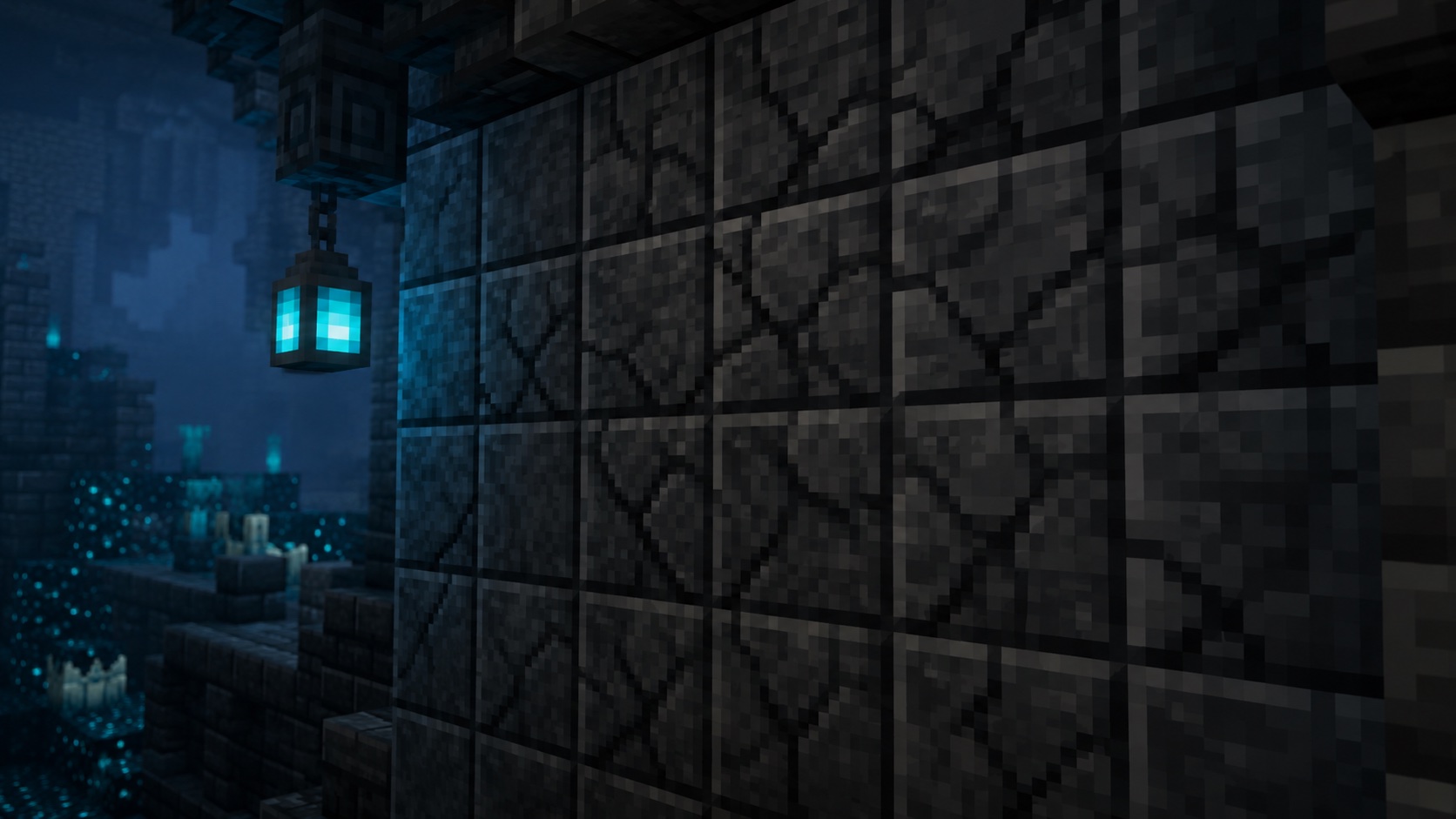
Cracked deepslate tiles are a decorative block in Minecraft. They look like deepslate tiles that have weathered over time, with visible fissures running across the dark gray surface. The block has the same shape and footprint as a regular deepslate tile, but the texture is broken up to give it a worn, ancient feel.
Cracked deepslate tiles do not appear naturally anywhere in the world. You will not find them in caves, in the deep dark, or in trial chambers. The only way to get them is to make them yourself, and the recipe is a little different from most deepslate variants.
Deepslate as a whole was added in version 1.17 as part of Caves and Cliffs. The full deepslate tile family, including the cracked version, came in 1.18. Since then, the cracked variant has been a go-to block for builders who want a darker, ruined-stone look without leaning on moss or vines.
How to get cracked deepslate tiles
You make cracked deepslate tiles by smelting deepslate tiles in a furnace. The result is one cracked deepslate tile per tile you put in. There is no shortcut. A crafting table will not work, and a stonecutter will not turn deepslate tiles into the cracked version either.
The recipe step by step
Here is the full chain from raw block to cracked deepslate tile:
- Mine deepslate with a pickaxe. Without Silk Touch, this gives you cobbled deepslate.
- Place four cobbled deepslate in a 2×2 square in a crafting table to get four polished deepslate.
- Place four polished deepslate in a 2×2 square to get four deepslate bricks.
- Place four deepslate bricks in a 2×2 square to get four deepslate tiles.
- Put deepslate tiles in the top slot of a furnace with a fuel like coal or charcoal in the bottom slot.
- Wait for the smelting bar to fill. The output is one cracked deepslate tile.
If you have a stonecutter, you can skip a few of those crafting steps and go directly from cobbled deepslate to polished, bricks, or tiles. The stonecutter still cannot make cracked variants, though, so the final smelt is unavoidable.
Smelting tips
Furnaces smelt one item every ten seconds, so a single tile takes ten seconds and a stack of 64 takes a little under eleven minutes. If you need a lot of cracked deepslate tiles for a big build, set up several furnaces in a row and feed them with hoppers. A blast furnace will not work here, since it only smelts metal items and ores. A smoker will not work either, since it only handles food. Cracked deepslate tiles need a standard furnace.
Any standard fuel works. Coal, charcoal, blocks of coal, lava buckets, dried kelp blocks, and bamboo all smelt cracked deepslate tiles fine. For long runs, lava buckets and blocks of coal are the most efficient by burn time.
Mining cracked deepslate tiles
Cracked deepslate tiles need a pickaxe. If you break them with anything else, like an axe, sword, shovel, or your fist, you get nothing. Wooden pickaxes work, but stone and above mine the block faster.
The block has the same hardness as polished deepslate, so it is noticeably tougher than cobblestone or normal stone. Iron pickaxes feel like the sweet spot for breaking through walls of cracked deepslate tile in survival.
Silk Touch is not needed. Cracked deepslate tiles drop themselves directly without it. Fortune does nothing here either; the block always drops one of itself per block broken.
Hardness and blast resistance
The block has a hardness of 3.5 and a blast resistance of 6. That puts it above standard cobblestone for explosion durability, which means a single creeper blast at point-blank chips the wall less than it would with normal stone, but it still cannot stand up to TNT chains.
Where cracked deepslate tiles spawn
Nowhere. Cracked deepslate tiles do not generate naturally in the world. You will not find them in trial chambers, ancient cities, the deep dark, or any other structure. Mojang made the cracked variant a craft-only block, the same way cracked stone bricks and cracked nether bricks are made.
This is different from cracked deepslate bricks, which also have to be smelted but share visual DNA with structures that use the brick texture. If you are exploring and find what looks like cracked deepslate, it is almost always cracked deepslate bricks, not tiles. The two textures are easy to mix up at a distance.
Building with cracked deepslate tiles
This block is a builder’s block. It has no redstone behavior, no light output, no special interactions. The texture is the whole reason it exists.
The cracks give the block a ruined, abandoned feel, which makes it useful for:
- Old fortress walls and battlements that look like they have weathered centuries
- Dungeon floors and crypt interiors
- Decorative trim around full deepslate tile walls to break up flat texture
- Roads and paths through dark biomes like the deep dark
- Ancient-city style builds when you do not want the chiseled look
Mixing cracked deepslate tiles with regular deepslate tiles, polished deepslate, and chiseled deepslate at roughly a 30 to 70 ratio is a classic builder trick. Too much cracked texture starts to look noisy. Too little and the wall looks artificial. A scattered handful of cracked tiles in a larger wall reads as natural age.
Color and lighting
Deepslate is dark, so any block in this family eats light. If you build a room out of cracked deepslate tiles and do not light it well, mobs will spawn quickly. Add lanterns, candles, or sea pickles. Soul lanterns and soul torches give a colder light that pairs well with the gray-blue tone of deepslate.
Cracked deepslate tiles vs cracked deepslate bricks
The two blocks are siblings. Both are smelted, both come from the deepslate family, and both have a weathered texture. The differences:
- Cracked deepslate bricks have a brick layout, with rectangular blocks visible in the texture.
- Cracked deepslate tiles use the tile pattern, which is a tighter grid of small squares.
- Bricks are crafted from polished deepslate, then smelted. Tiles are crafted from deepslate bricks, then smelted.
- Tiles cost more to make because of the extra crafting step.
For most builders, the bricks read as a classic dungeon block and the tiles read as a more refined, modern-looking texture. Use whichever fits the build.
Java vs Bedrock differences
Both editions handle cracked deepslate tiles the same way. The recipe, hardness, smelting time, drops, and texture all match across Java and Bedrock. There is no parity gap to watch out for here, which makes this block easier to work with on a multiplayer realm than some older blocks.
Common mistakes when working with cracked deepslate tiles
A few things trip players up:
- Trying to use a stonecutter. The stonecutter does not make any cracked variant in Minecraft. Always use a furnace.
- Smelting the wrong input block. Cobbled deepslate, polished deepslate, and deepslate bricks each smelt into their own outputs. Only deepslate tiles smelt into cracked deepslate tiles.
- Breaking the block without a pickaxe. The block drops nothing if you mine it the wrong way. Always carry a pickaxe.
- Expecting natural spawns. There are none. If a friend says they found cracked deepslate tiles in a dungeon, they probably found cracked deepslate bricks.
Frequently asked questions
Can you make cracked deepslate tiles in a stonecutter?
No. The stonecutter only makes uncracked variants in the deepslate line. To get the cracked version of any block, you have to smelt the regular version in a furnace.
Do cracked deepslate tiles spawn naturally?
No. Cracked deepslate tiles only exist if a player makes them. They do not generate in any structure or biome.
What is the recipe for cracked deepslate tiles?
Smelt one deepslate tile in a furnace with any fuel. The output is one cracked deepslate tile. Each tile takes ten seconds to smelt.
Can a blast furnace smelt cracked deepslate tiles?
No. Blast furnaces only smelt metal items and ores. For cracked deepslate tiles, you have to use a standard furnace. A smoker will not work either, since it only handles food.
What tool do I need to mine cracked deepslate tiles?
Any pickaxe works. The block drops itself even with a wooden pickaxe. Stone and iron mine it noticeably faster, and netherite is the fastest.
Are cracked deepslate tiles blast resistant?
They have a blast resistance of 6, which is the same as deepslate tiles, deepslate bricks, and polished deepslate. That holds up against a single creeper explosion at distance, but TNT and chained creeper hits will still break the block.
Can you turn cracked deepslate tiles back into regular deepslate tiles?
No. There is no way to reverse the smelting. Once a deepslate tile becomes cracked, it stays cracked. If you accidentally smelt the wrong amount, the only fix is to craft more deepslate tiles from scratch.
Closing thoughts
Cracked deepslate tiles are a small but useful addition to the deepslate family. The crafting chain takes a few steps, but the end result is a block that gives builds a lived-in, ancient feel without leaning on moss or vines. Stock a few stacks before starting any deep dark or castle build, and mix them in sparingly with regular tiles for the cleanest look.