What dirt is in Minecraft
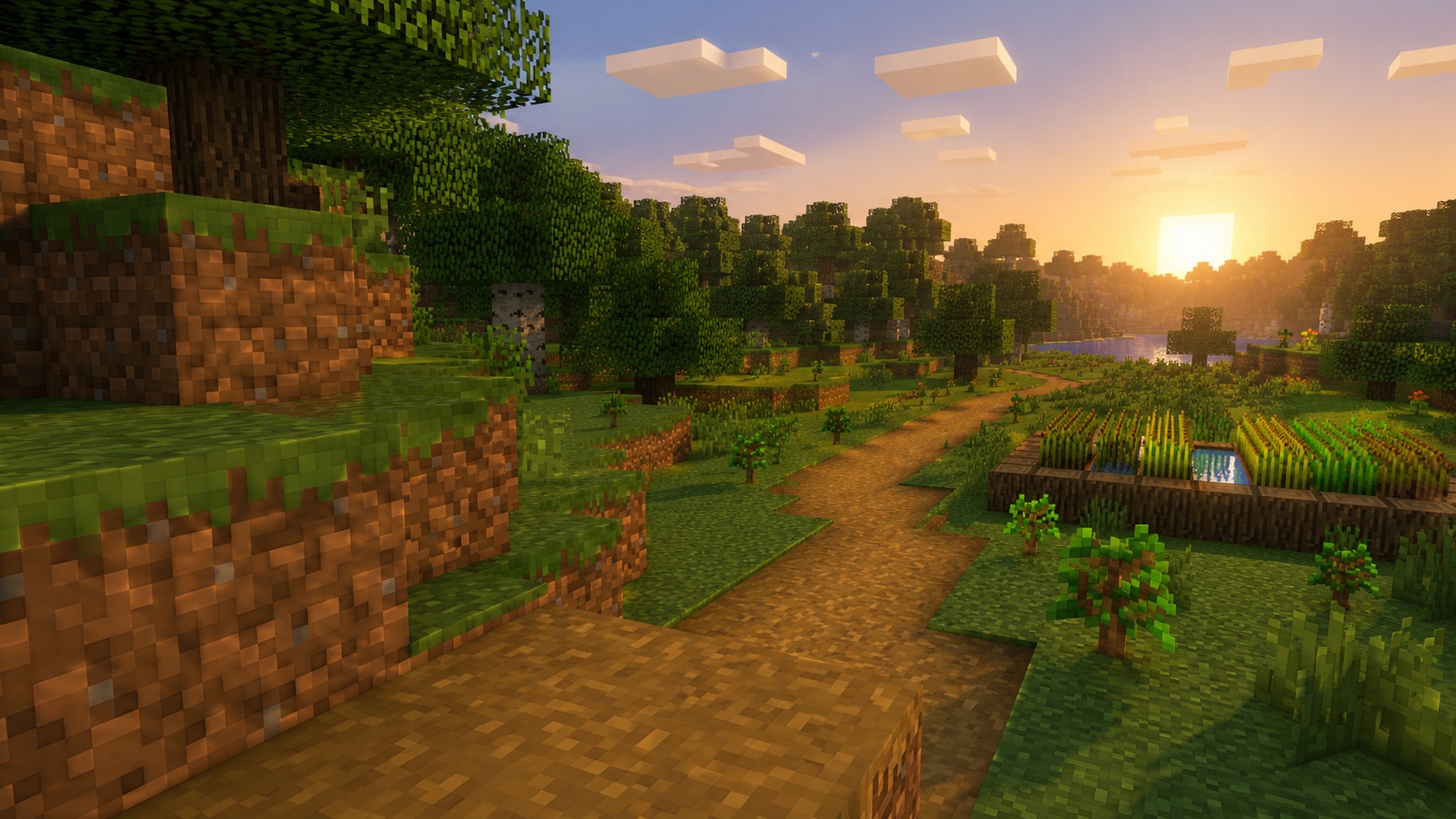
Dirt is the brown earth block you see almost everywhere in the overworld. It sits under grass, under sand, around water, in cave walls, and behind every layer of natural cover. It’s one of the first blocks a new player ever mines, and most players never run out of it.
The block also holds the world together visually. Grass blocks are dirt with a green top. Farmland is dirt that’s been tilled. Mud, podzol, and mycelium all share the same shape and most of the same behavior. Once you understand what dirt does and how it changes, a lot of farming and terrain work gets easier.
How to get dirt
Hit a dirt block with anything and it drops a dirt item. A wooden shovel mines it fastest, but bare hands work fine. The drop rate is 100% with any tool, including swords. Silk Touch and Fortune have no effect on dirt.
You’ll find dirt directly under grass, in the lower layers of beaches, in mountain biomes mixed with stone, in lush caves, and as a base under most surface terrain. In a typical overworld run you can stockpile thousands of dirt blocks without trying.
Mobs and explosions don’t generate new dirt for you. Creepers blowing up a grass block can leave dirt behind though, since grass blocks always break down into dirt when destroyed without Silk Touch.
What dirt does on its own
Dirt has no gravity. It stays where you place it. Pistons can push and pull it like any normal block. Water flows past without breaking it. Lava on top will eventually catch grass blocks but not plain dirt itself.
The big thing dirt does passively is host grass and mycelium. If a grass block sits next to a dirt block and there’s enough light, grass spreads to that dirt over time. The light level on the dirt block needs to be 4 or higher. Two or three blocks away can also receive grass eventually, since the spread checks a small area around each grass block. Mycelium spreads the same way, but it’s rarer in the wild and only generates naturally in mushroom field biomes.
Crops will not grow on plain dirt. You need farmland for that. Saplings, mushrooms, sweet berry bushes, and a handful of other plants grow on dirt directly. Trees from saplings need dirt or one of its variants underneath the sapling.
Turning dirt into something else
Right-click dirt with a hoe and it becomes farmland. The hoe converts the top of the block to soil that crops will plant into. Hydration comes from a water source within 4 blocks. Without water, farmland dries out over time but stays farmland. The fast way to lose farmland is to jump on it, which trips the trample check and reverts the block to dirt along with anything planted in it.
Right-click dirt with a shovel and it becomes a dirt path. Dirt path is purely cosmetic. Mobs walk on it normally, and breaking it gives back a dirt item. It’s the standard way to mark walking routes through a village or base.
Drop a water bottle on a dirt block in version 1.19 or later and the dirt turns into mud. Mud is a softer-looking variant used in mangrove swamps and in the recipe for packed mud and mud bricks. Once dirt becomes mud, you dry it out by placing it on top of a dripstone block with a free space below, then waiting.
Dirt variants and how they differ
The base game has several blocks that share dirt’s shape and rough purpose:
- Coarse dirt. Crafted with 2 dirt and 2 gravel in a 2×2 pattern, which gives 4 coarse dirt. Grass and mycelium will not spread to coarse dirt, so it’s useful when you want bare ground that stays bare.
- Rooted dirt. Generates naturally in lush caves and under azalea trees. Use a hoe on it and it becomes regular dirt, dropping a hanging roots item. Bone meal applied to rooted dirt with an air space below grows a hanging roots block underneath.
- Podzol. The dark, mossy-looking variant found in old growth taigas and giant tree taigas. Mushrooms and saplings grow on it without needing low light. Silk Touch is required to keep it as podzol when mined, otherwise it drops regular dirt.
- Mycelium. The purple-tinted block from mushroom fields. Mushrooms spread across it freely. Like podzol, you need Silk Touch to keep it as mycelium when mined.
- Grass block. Dirt with a green top and a grass texture. Drops dirt without Silk Touch, drops itself with Silk Touch.
- Farmland. Tilled dirt for crops. Reverts to dirt if trampled by jumping.
- Dirt path. Decorative shovel-converted dirt with a flatter look. Drops dirt when broken.
- Mud. Wet dirt added in
1.19. Used to craft packed mud and mud bricks.
Every block on that list is technically separate from dirt in the game’s data, but they share the same family of behavior and the same drop pattern. If you have dirt, you have access to all of them in one short hop.
Building and farming with dirt
Dirt is the first scaffolding block most players reach for. It’s free, you have a stack within five minutes, and it stacks to 64 in a single inventory slot. Pillars made of dirt let you climb to safety, build cover, or get a cheap line of sight. The trade-off is that it looks unfinished, so most players replace dirt pillars with stone or wood once they’re done with them.
For farming, the standard layout is a 9×9 plot with a water source in the middle, tilled into farmland with a hoe. That gives you the most yield per water block. Dirt also forms the base of any animal pen, since grass spreads onto it and feeds passive mobs like cows and sheep over time.
Tree farming is another big use case. Saplings need vertical clearance above and a dirt or grass block below. Spruce, jungle, and dark oak have giant variants that require a 2×2 sapling arrangement on dirt to grow.
Dirt also blocks light, which makes it a useful temporary barrier when you need to seal off a tunnel until you finish a real wall.
Tips and common mistakes
The single most common mistake is trampling your own farmland. Jumping on a tilled block reverts it to dirt and uproots whatever was planted. Walking is fine. Jumping isn’t. If you need to cross a farm, place dirt path or slabs over a row to keep your seeds safe.
The second mistake is breaking grass blocks expecting to keep them. Without Silk Touch on a shovel, a grass block always drops as dirt. If you want to relocate grass for an animal pen or a build, get Silk Touch first.
If you want a stable bare-dirt path through a forest, place coarse dirt instead of regular dirt. Regular dirt will sprout grass as soon as a grass block grows next to it, which usually happens within a day or two of in-game time.
For mycelium and podzol spreading, dirt next to mycelium will eventually become mycelium under the same light conditions that allow grass to spread. If you’re building a mushroom farm and want the floor to stay mushroom-friendly, lay down mycelium and let it spread to nearby dirt instead of placing each block manually.
Dirt is renewable in the sense that you can always dig more from the world, but it doesn’t regenerate in a chunk once mined. Reforesting a flat area means hand-placing dirt and planting saplings.
Java versus Bedrock
Plain dirt behaves the same way on both editions. The recipe for coarse dirt is identical, the conversion to farmland and dirt path is identical, and the drop rules match.
Minor edition differences show up around the variants. Mycelium spread runs slightly faster in Java on average, and rooted dirt’s hanging roots drop chance is tuned differently across the two editions. For most players these differences don’t matter, and dirt itself is the same block in both.
Frequently asked questions
What’s the fastest tool to break dirt?
A shovel of any material. A netherite shovel is the fastest, but even a wooden shovel breaks dirt in about a third of a second. Bare hands work too if you don’t mind the extra time.
Does dirt fall like sand or gravel?
No. Dirt has no gravity. You can place it as a floating block, build pillars and bridges with it, and it stays put until something breaks it.
How do I make coarse dirt?
Place 2 dirt and 2 gravel in a 2×2 pattern on the crafting grid. The recipe gives 4 coarse dirt. You can also find coarse dirt naturally in badlands, savannas, and parts of taiga biomes.
Can grass grow on coarse dirt?
No. Coarse dirt blocks grass and mycelium spread. That’s the entire reason to use it for paths and yard areas that should stay bare.
Can mobs spawn on dirt?
Yes. Hostile mobs spawn on dirt in the dark like any other opaque block. Passive mobs like cows, sheep, pigs, and chickens require grass blocks specifically for natural spawning, but they walk on dirt freely once spawned.
How do I turn dirt back into grass?
Place the dirt block next to or near a grass block in a lit area. Grass spreads to dirt at light level 4 or higher. You can speed nearby spread by using bone meal on the grass block, though bone meal won’t directly convert a standalone dirt block on its own.
What’s the difference between dirt path and farmland?
Dirt path is a cosmetic block made with a shovel. It’s slightly shorter than a full block, so mobs walk over it like a half-step. Farmland is made with a hoe and grows crops. Walking on either is fine, but jumping on farmland reverts it to dirt.
The point of all this
Dirt looks like a throwaway block until you notice how many other systems hinge on it. Grass spread, farming, tree growth, mushroom farms, decorative paths, and the entire mud and packed mud chain all start with a dirt block sitting in the right spot. Treat it as raw material rather than scenery and a lot of midgame builds get easier.