What dandelions are in Minecraft
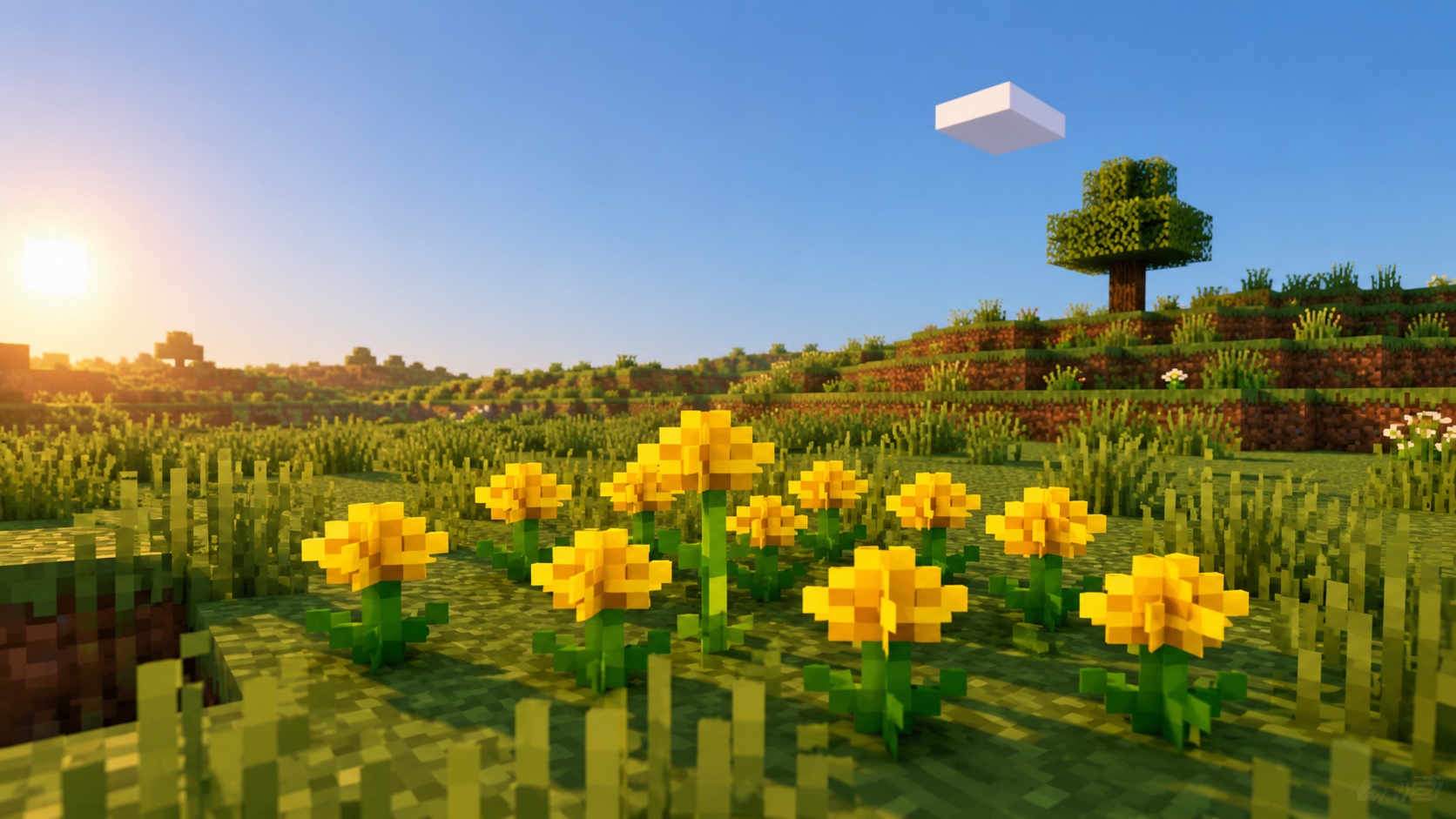
The dandelion is the most common flower in Minecraft. It’s a small yellow plant that spawns naturally on grass blocks across most overworld biomes, and it’s often the first flower a new player picks up.
It looks plain, but it pulls real weight. Dandelions feed yellow dye recipes, attract bees, feed rabbits, and turn into a useful suspicious stew. They’re also one of the easiest renewable resources in the game once you know the bone meal trick.
Where to find dandelions
Dandelions spawn on grass blocks in most flat, green biomes. The easiest places to find them in any quantity:
- Plains
- Sunflower plains
- Meadow
- Forest
- Flower Forest
- Birch Forest
- Old growth birch Forest
- Cherry grove
- Taiga
- Snowy plains
You won’t find them in deserts, badlands, oceans, the Nether, or the End. If you’re in a biome that doesn’t grow flowers naturally, you’ll have to bring some with you and plant them.
Breaking tall grass with shears or your hand sometimes drops a dandelion as well, though the chance is small and the rate is far lower than bone-mealing a grass block. If you’re already chopping through grass to clear a building site, keep an eye out for the occasional flower drop and grab it.
Dandelions vs. other yellow flowers
Two other yellow plants exist in Minecraft: sunflowers and the open-flower phase of cactus blooms in some packs. The dandelion is the only single-block yellow flower that drops on grass in nearly every overworld region. Sunflowers are two blocks tall and only spawn in sunflower plains. If you see a single yellow flower head at roughly chest height, it’s a dandelion.
How to pick and place dandelions
Walk up to any dandelion and break it with your hand. No tool needed. The flower drops as an item every time, and your hand takes no durability damage.
To replant one, hold the dandelion item and right-click on a valid surface. Dandelions can be placed on:
- Grass block
- Dirt
- Coarse dirt
- Rooted dirt
- Podzol
- Mycelium
- Moss block
- Mud
- Farmland
- Inside a flower pot
They can’t be placed on stone, sand, gravel, or netherrack. If you’re trying to put one on a path block or trapdoor, it won’t stick.
Bone meal trick: free dandelions forever
This is the single most useful thing to know about dandelions. Right-click bone meal on a grass block and the game grows tall grass and small flowers on top of it. The flower it grows depends on the biome.
In any biome that supports dandelions, bone-mealing grass blocks gives you a steady stream of free dandelions and other matching biome flowers. Plains, sunflower plains, meadow, and forest are all reliable for dandelion farming this way.
The economics work in your favor. One bone gives three bone meal. One bone meal pop on a grass block usually drops between zero and a few flowers and grass blades. Skeletons drop one to two bones on death, so even a small skeleton farm in a dungeon spawner room gives more dandelions than you’ll ever need.
Why bone meal sometimes drops only grass
Bone meal on grass has a chance to grow only short grass with no flower at all. That’s normal behavior, not a bug. The flower-to-grass ratio shifts based on the biome’s flower table. To raise your odds of dandelions specifically, stand in a plains biome rather than a forest, since plains have fewer competing flower types.
What dandelions are used for
Yellow dye
Place one dandelion in a crafting grid, in any slot, in any inventory grid, and you get one yellow dye. Yellow dye colors wool, terracotta, glass, beds, candles, banners, leather armor, shulker boxes, and concrete powder. If you want a yellow build, dandelions are the cheapest path to it.
Suspicious stew with the saturation effect
Combine a dandelion with a brown mushroom, a red mushroom, and a bowl in a crafting table to get suspicious stew. A dandelion stew gives the saturation effect when eaten, which restores hunger and saturation more efficiently than normal food. It’s a strong emergency food in the early game when steak and bread aren’t an option yet.
Saturation from a dandelion stew lasts only a moment, so don’t try to stockpile it for a long mining run. Eat one when your hunger drops, then go back to regular food.
Bees love dandelions
Bees pollinate dandelions and carry pollen back to their nest. A bee with pollen on its back deposits honey into a nearby beehive or bee nest, which fills the hive’s honey level. Plant a few dandelions near your bee setup and the bees handle the rest.
Dandelions also help when you want to move a bee. Hold one in your main hand and bees within about six blocks will follow you. This is the easiest way to walk a few bees from a wild nest into a hive you placed at home.
Rabbit food
Rabbits eat dandelions. Hold one in your hand and rabbits nearby will follow you. Feed two dandelions to a pair of adult rabbits to breed them and produce a baby. Carrots and golden carrots also work, but dandelions are easier to grow at scale.
Composter fuel
Drop a dandelion into a composter and there’s a 65% chance the compost level rises by one. Seven full level-ups give you a single bone meal. That’s not the most efficient composter input, but it’s free output if you’ve already got a dandelion farm running.
Decoration
Dandelions look fine in flower pots, on grass paths, and around villages. They naturally generate inside village structures, so they fit any farmhouse or starter base aesthetic without feeling out of place. Pair them with poppies, oxeye daisies, and cornflowers for a quick natural color mix that doesn’t need any dye.
Java vs. Bedrock differences
Dandelion behavior is mostly identical on both editions. A few small notes:
- The exact flower-to-grass ratio when you bone-meal a grass block varies slightly between Java and Bedrock, but dandelions show up reliably on both.
- Both editions share the same suspicious stew recipe and the same saturation outcome, though the duration of the effect can read differently in inventory tooltips.
- Both editions include the dandelion in flower forests, meadows, plains, and the other biomes listed above.
Tips and common mistakes
- If you only need yellow dye for one build, don’t burn inventory slots stockpiling dandelions. Pick a stack and convert them all at once.
- If you want to farm dandelions specifically, stand in a plains biome before bone-mealing. Forest grass blocks return more competing flowers, so your dandelion-per-bone-meal rate drops.
- Don’t waste a dandelion on a composter when you could use a sapling, kelp, or pumpkin instead. Save the flowers for dye and stew.
- If your bees aren’t filling a hive, check that there’s a flower within about thirty blocks of the hive. A few planted dandelions usually fix the problem.
- Dandelions break instantly when water flows through them. If you’re farming on grass, build a dirt collector below your bone-meal spot and don’t let water run through your farm.
Frequently asked questions
Can you eat a dandelion in Minecraft?
Not directly. Dandelions don’t restore hunger when held in your hand. You can craft them into suspicious stew with two mushrooms and a bowl, then eat the stew for the saturation effect.
How do you get yellow dye in Minecraft?
Place any dandelion in a crafting grid to make one yellow dye. Sunflowers also produce two yellow dye each, but dandelions are cheaper and far more common.
Can you grow dandelions with bone meal?
You can’t bone-meal a placed dandelion to make it spread. Instead, bone-meal a grass block in a biome that grows dandelions, and one of the flowers that pops up will likely be a dandelion. Plains and sunflower plains give the highest dandelion yield.
Do bees pollinate dandelions?
Yes. Bees treat dandelions like any other small flower and will visit them, pollinate them, and carry pollen back to their hive. The flower stays in place after pollination, so you don’t lose it.
Can you put a dandelion in a flower pot?
Yes. Right-click a flower pot with a dandelion in your hand and the pot displays the flower. Break the pot to recover the dandelion later.
Are dandelions in every biome?
No. Dandelions naturally generate in most flat, grassy biomes, including plains, meadow, forest, flower forest, birch forest, cherry grove, taiga, and a few others. They don’t generate in deserts, oceans, badlands, the Nether, or the End. You can plant a dandelion in any of those biomes if you bring one with you, but new ones won’t spawn naturally there.
What’s the fastest way to farm dandelions?
Set up a small grass field in a plains biome, then bone-meal the grass blocks. A skeleton farm in a dungeon spawner room gives you a steady supply of bone meal, which translates into nearly unlimited dandelions and other small flowers.
Final word
Dandelions are the cheapest path to yellow in Minecraft and one of the only flowers that’s actually useful for early-game food. Once you have a bone meal source, you can grow as many as your build needs in an afternoon. Plant a few near your bees, keep some in pots, and turn the rest into dye.