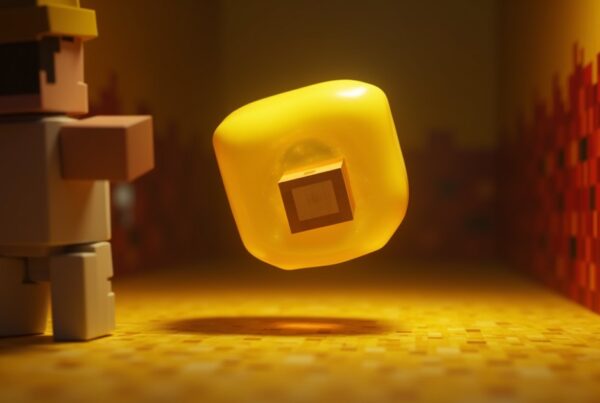
What is the Breeze?
The Breeze is a hostile mob added in Minecraft 1.21, the Tricky Trials update. It looks like a small, swirling pocket of wind with a faint humanoid shape, and it almost never holds still. Instead of walking, it hops and glides around the room, which makes it one of the harder mobs in the game to land a clean hit on.
It fights from range. The Breeze fires wind charges that knock you backward and shove you around the arena. A single Breeze on its own is manageable, but trial chambers tend to throw two or three at you at once, usually while other mobs are crowding in as well.
The Breeze is also the source of two things players actually want: the breeze rod, and through it, the mace. If you’re after the strongest melee weapon in the game, the road to it runs through a few Breeze fights.
Where to find the Breeze
The Breeze does not spawn out in the open world. You will never bump into one while exploring caves or wandering around at night. It comes only from trial spawners inside trial chambers, the underground structures that generate down in the deepslate layer.
Trial chambers sit roughly between Y level -40 and Y level 0, built from tuff, copper, and polished blocks. Inside them you’ll find trial spawners: block-shaped spawners that wake up when a player walks close, summon a wave of mobs, and go dormant once that wave is cleared. Some of those spawners are set to produce Breezes, often in a dedicated arena with launch pads and open drops.
A normal trial spawner gives you a set number of Breezes per player nearby. An ominous trial spawner, which activates when you enter carrying the Bad Omen effect, spawns more of them and makes the fight tougher. In exchange, the ominous vaults at the end pay out better loot, including the rarest drop you need for the mace.
How the Breeze attacks
The Breeze’s entire kit is built around wind. Once you understand what a wind charge actually does, the fight stops feeling random.
Wind charge projectiles
The Breeze lobs wind charges in an arc toward you. When one lands, it bursts into a short gust that pushes everything near the point of impact away from it. The direct hit does only a little damage. The real threat is the knockback. A well-aimed gust can throw you off a ledge, into lava, or straight into a pack of other mobs that were waiting for the chance.
The Breeze leads its shots, aiming at where you’re about to be rather than where you are. That means standing still turns you into an easy target, while moving in unpredictable directions throws off its aim and buys you room to close in.
Constant movement
The Breeze jumps and slides around the room and takes no fall damage, so it cheerfully leaps off ledges to reposition. It likes to circle you and keep its distance, which is exactly why a slow, heavy swing tends to whiff. It’s also small and sits low to the ground, so your crosshair has to drop lower than instinct tells you.
It interferes with blocks
The gust from a wind charge can flip levers, press buttons, ring bells, and open or close doors, trapdoors, and fence gates. Inside a trial chamber this can work against you by popping open a door you wanted shut. Once you have wind charges of your own, though, the same trick becomes a tool you can use on purpose.
How to beat a Breeze
A Breeze has 30 health, the equivalent of 15 full hearts, so it isn’t especially tanky. The challenge is connecting with it at all. A few habits make the fight much shorter.
- Fight in a tight space. Backing the Breeze into a corner limits how far it can bounce away between your swings.
- Keep a shield up. Blocking soaks the direct damage from wind charges and softens the knockback, which gives you the half-second you need to step in.
- Bring a bow or crossbow. Since the Breeze works hard to stay at range, arrows often land more reliably than chasing it with a sword does.
- Mind your footing. Most Breeze deaths don’t come from the damage. They come from being shoved into lava, off a drop, or into a mob you forgot was there.
If you commit to melee, time your swing for the instant the Breeze touches down from a jump. It’s noticeably easier to hit at the bottom of a hop than it is mid-glide.
Breeze drops and what they’re for
When you kill a Breeze, it drops one or two breeze rods plus a bit of experience. The breeze rod is the reason most players bother with the fight, because it feeds into two different things.
Wind charges
A single breeze rod crafts into four wind charges. A wind charge is a throwable item that produces the same gust the Breeze uses on you. Throw one at your feet to launch yourself upward, fling one at a distant door to open it from across the room, or use one to reset and extend a jump. They’re equal parts mobility tool and toy, and they never run out as long as you keep fighting Breezes.
The mace
The breeze rod is one of the two ingredients for the mace, the heavy weapon introduced in the same update. You combine a breeze rod with a heavy core, which comes from the vaults inside trial chambers, to craft the weapon. The mace deals more damage the farther you fall before you land a hit with it, and wind charges happen to be the cleanest way to gain that height. In a roundabout way, the Breeze hands you both halves of its own counter.
Using wind charges yourself
Wind charges are worth understanding as a player tool, not just as the thing being thrown at you. Each one, when it lands or hits a surface, creates a burst of wind that pushes nearby entities. Aim it at the ground beneath your feet and that push launches you into the air. With a running start and a couple of charges, you can clear gaps, scale walls, or set up a mace smash attack from real height.
They also flip the block-interaction trick in your favor. A wind charge can open a door, trip a lever, or ring a bell from a distance, which opens up redstone contraptions and quality-of-life tricks that weren’t possible before 1.21. Because the charges are renewable from breeze rods, you can afford to experiment without worrying about a limited supply.
Is it worth farming Breezes?
For most players the answer is yes, at least until you have a mace and a healthy stack of wind charges. Each fight returns breeze rods, and those rods convert into both the weapon and an endless supply of movement charges. Trial chambers also reset their spawners over time, so a chamber you’ve already cleared can be run again for more rods.
Past that point the value drops off. Once you own a mace and don’t need more wind charges, repeated Breeze fights mostly net you spare rods and experience. They’re still a steady experience source if you build a comfortable arena around a Breeze spawner, but they’re not the fastest XP farm in the game.
Tips and common mistakes
The most common mistake is treating the Breeze like a melee mob and chasing it in circles. You burn time, take gusts to the back, and let it herd you toward the nearest hazard. Let it come to you, or pin it against a wall, and the fight gets far simpler.
Another mistake is ignoring the room. Before you trigger a Breeze spawner, take a second to scan the arena. Note where the drops, the lava, and the open doorways are, because the Breeze will spend the whole fight trying to knock you into every one of them.
Last, don’t blow through your first breeze rods. It’s tempting to convert them straight into wind charges and spend the afternoon launching yourself around, but if the mace is your goal, set at least one rod aside for the recipe before you start playing.
Frequently asked questions
What version added the Breeze?
The Breeze arrived in Minecraft 1.21, the Tricky Trials update, in both Java and Bedrock editions.
Can the Breeze spawn naturally at night?
No. The Breeze only comes from trial spawners inside trial chambers. It never appears through normal world spawning the way zombies or skeletons do.
How much health does a Breeze have?
A Breeze has 30 health points, the same as 15 full hearts.
Does the Breeze take fall damage?
No. The Breeze is immune to fall damage, which is why it leaps off ledges without hesitating.
Can wind charges hurt the Breeze?
No. A Breeze is immune to wind charges, both the ones it fires and the ones you throw at it. You’ll need a normal weapon to bring one down.
What does a Breeze drop?
It drops one or two breeze rods and some experience. Breeze rods craft into wind charges and are required to make the mace.
How many wind charges does one breeze rod make?
One breeze rod crafts into four wind charges.
If you’re stepping into a trial chamber for the first time, treat the Breeze as a positioning puzzle rather than a damage race. Control the space, keep your back to a wall instead of a drop, and the breeze rods you carry out are your first step toward the heaviest hit in the game.