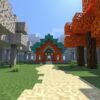
What is a villager?
A villager is a passive human mob that lives in villages across the Overworld. Villagers are the backbone of trading in Minecraft. Give them emeralds and the right items, and they hand back everything from enchanted books and diamond gear to food, maps, and building blocks.
Each villager wanders its village during the day, sleeps in a bed at night, and hides indoors when danger shows up. Most of them take a job, wear an outfit that matches that job, and offer trades tied to it. A few never work at all. Learning how they pick jobs, level up, and restock is the difference between a slow trickle of emeralds and a trading hall that pays for your whole world.
Villager professions and job sites
A villager without a job wears a plain brown or biome-colored robe and offers no trades. To give one a profession, place a job site block nearby and wait. An unemployed adult claims the block, changes its outfit, and starts offering trades. Break the block before that villager reaches level two, and it drops the job and becomes available for a different one. This is how you reroll a villager until it offers the trade you want.
There are thirteen working professions, and each is tied to one job site block:
| Profession | Job site block | Known for |
|---|---|---|
| Armorer | Blast furnace | Iron, chainmail, and diamond armor |
| Butcher | Smoker | Cooked meat and emeralds for crops |
| Cartographer | Cartography table | Explorer maps and banners |
| Cleric | Brewing stand | Redstone, glowstone, ender pearls, XP bottles |
| Farmer | Composter | Bread, pies, and buying your extra crops |
| Fisherman | Barrel | Enchanted fishing rods and cooked cod |
| Fletcher | Fletching table | Arrows, bows, and crossbows |
| Leatherworker | Cauldron | Leather armor and horse armor |
| Librarian | Lectern | Enchanted books, name tags, glass |
| Mason | Stonecutter | Polished stone, quartz, terracotta |
| Shepherd | Loom | Wool, dye, beds, and paintings |
| Toolsmith | Smithing table | Enchanted tools and diamond gear |
| Weaponsmith | Grindstone | Enchanted axes and diamond swords |
The Librarian is the one most players farm first. A single lectern villager can be rerolled over and over until it offers a top-tier enchantment like Mending or Efficiency V for a handful of emeralds and a book.
Nitwits and unemployed villagers
Two kinds of villager never trade. The unemployed villager just hasn’t claimed a job yet, and it will take one the moment a free job site block is in range. The nitwit wears a green robe and is a permanent dead end. Nitwits never take a profession, no matter how many job blocks you set out, so they only really matter as breeding stock or golem bait.
How trading works
Every trade costs emeralds, either on their own or paired with an item. When you complete trades, the villager earns experience and climbs through five ranks: Novice, Apprentice, Journeyman, Expert, and Master. Each rank shows a different badge on the villager’s belt, from a rough stone badge at the bottom up to a diamond one at Master. Leveling unlocks new trades, so the best gear only appears once a villager has been worked up to Expert or Master.
Trades also have a stock limit. A villager can only sell each offer a set number of times before it locks and the trade greys out. To reset the stock, the villager walks back to its job site block during the workday and restocks, which it will do up to twice per day. If you trap a villager away from its job block, it can never restock, so keep the block close.
One more thing worth knowing: the first time you trade with any offer, its price can drift up or down slightly based on demand. Buy the same item many times and the price creeps higher. Leave it alone and it settles back down.
Breeding villagers
Villagers breed on their own when two conditions are met: there are enough beds nearby, and both villagers are willing. Willingness comes from food. A villager becomes willing when it holds a surplus, meaning three bread, twelve carrots, twelve potatoes, or twelve beetroots in its inventory. Farmers grow and share food automatically, which is why a village with an active farmer tends to grow without any help from you.
To build a breeder, put two willing villagers in a space with at least three beds and some food on the ground, and they will produce a baby. The baby needs its own bed to be counted, so the rule of thumb is one extra bed per new villager you want. Baby villagers grow into unemployed adults after about twenty minutes, then claim whatever job block is free.
A quick warning: villagers only breed if the game thinks there is room. If every bed is already claimed, breeding stops until you add more.
Villager types by biome
A villager’s outfit depends on where it spawned, not on the biome it currently stands in. Five biomes generate villages, and each has its own look: plains, desert, savanna, taiga, and snowy. A villager born in a desert village keeps its desert robes even if you walk it to a snowy plains, and a cured zombie villager takes the outfit of the biome where you cure it. The type is cosmetic and does not change what a villager trades.
Zombie villagers and curing
When a zombie kills a villager, there is a chance the villager turns into a zombie villager instead of dying. On Hard difficulty that chance is always 100 percent, which makes Hard the safest setting if you want to protect a village population. Zombie villagers can be cured back into normal villagers, and doing so is one of the most useful tricks in the game.
To cure one, hit it with a splash potion of Weakness, then feed it a golden apple by right-clicking with the apple in hand. The zombie starts shaking and shows swirling red particles. After a few minutes it converts back into a villager, keeping its profession and trades if it had any.
The payoff is the discount. A cured villager offers much cheaper trades, and curing the same villager repeatedly stacks the discount until prices bottom out near one emerald. A trading hall built on cured Librarians is the cheapest source of enchanted books in the game.
Reputation and the Hero of the Village
Villagers remember how you treat them through a gossip system. Curing a zombie villager, trading often, and defending the village raise your standing, which lowers prices. Hitting villagers or killing them lowers your standing and pushes prices up, and villagers share these opinions with each other, so one bad act can sour a whole village.
Winning a raid grants the Hero of the Village effect. While it is active, every villager gives you a steep discount on trades and occasionally throws gifts at you based on their profession. Farmers toss bread, butchers toss meat, and so on. The effect lasts for a real-world stretch of time, so it pays to do all your shopping right after clearing a raid.
Iron golems and protection
Villages defend themselves with iron golems. When a village has enough villagers who have claimed beds and job sites, an iron golem spawns on its own to patrol and fight hostile mobs. You can also build one yourself by stacking four iron blocks in a T shape and topping it with a carved pumpkin. Golems will not hurt villagers, and they attack most hostile mobs on sight, so a couple of them turn a fragile village into a hard target.
Tips and common mistakes
Light your village fully. Zombies that spawn in the dark can wipe out villagers overnight and undo hours of breeding. Torches, lanterns, or any light source on the ground stops most of it.
Do not break a Librarian’s lectern after it hits level two if you like its trades. Rerolling only works before the second level locks the offers in. Once locked, the trades are permanent for that villager.
Keep job site blocks within a few blocks of where the villager stands, and give each working villager its own block. Two villagers cannot share one job site, and a villager cut off from its block can never restock.
Finally, move villagers by boat or minecart rather than pushing them across the world. They path poorly over long distances and tend to wander into water or off cliffs the moment you look away.
Frequently asked questions
How do you change a villager’s profession?
Break its current job site block before the villager reaches level two, wait for it to become unemployed, then place the job block you actually want nearby. Once a villager reaches level two, its profession is locked for good.
Why won’t my villagers breed?
The two most common reasons are not enough beds and not enough food. Every villager, including babies, needs an unclaimed bed within the village. Add spare beds and drop bread or carrots so the villagers become willing.
Can you cure a zombie villager?
Yes. Throw a splash potion of Weakness on it, then feed it a golden apple. It converts back to a villager after a few minutes and keeps whatever profession it had before.
What is a nitwit?
A nitwit is a villager in a green robe that can never take a job or trade. You cannot fix a nitwit, so use it for breeding or golem spawning rather than trading.
Do villagers restock trades?
They do, up to twice per day, but only by walking to their job site block during the workday. Keep the block close, or the trades stay locked once you buy them out.
How do you get cheaper trades?
Cure zombie villagers for a stacking discount, and clear a raid to earn the Hero of the Village effect, which drops prices across the whole village while it lasts.
Where to start
If you only set up one villager, make it a Librarian on a lectern and reroll it for Mending. That single trade pays for itself faster than any other in the game, and once you understand rerolling, restocking, and curing, the rest of a trading hall is just repetition.