A shulker box is a portable storage block that keeps everything inside it when you break it. That one trait makes it the most useful storage item in Minecraft. A chest stays where you build it. A shulker box goes in your inventory, holds 27 stacks of items, and comes back out wherever you need it.
You craft a shulker box from two shulker shells and a chest. The shells only come from shulkers, the floating turret mobs that live in End cities, so a shulker box is a mid-to-late game item. Once you have one, hauling a full inventory across the map stops being a chore.
This guide covers how to get the shells, craft the box, dye it any of 16 colors, and use it well for mining trips, base moves, and sorted storage.
What a shulker box does
A shulker box holds 27 item slots, the same as a single chest. The difference is what happens when you mine it. A chest spills all of its contents onto the ground. A shulker box drops as a single item with everything still stored inside.
That means you can fill a shulker box, break it, and carry it in your inventory. Every shulker box you carry is effectively 27 extra slots. Players use them to clear out a mining session in one trip, move an entire base, or keep a tidy set of labeled boxes for ores, food, building blocks, and tools.
You can place a shulker box on any surface, including floors, walls, and ceilings. It does not need empty space above it to open, which already makes it more flexible than a chest.
How to craft a shulker box
Getting shulker shells
Shulker shells drop only from shulkers. Shulkers spawn in End cities, the tall purple structures found on the outer End islands. You reach those islands by defeating the ender dragon, then traveling through an End gateway.
Each shulker has a 50% chance to drop one shell when killed. The Looting enchantment on your sword improves those odds. You need two shells per box, so plan on clearing several shulkers. A single End city usually has more than enough.
Shulkers fire homing projectiles that apply the Levitation effect, which floats you upward and can drop you to your death when it wears off. Bring a bow, blocks to wall yourself in, and a plan for getting down safely if you get levitated off an edge.
The crafting recipe
Once you have two shells, the recipe is simple. Place a chest in the center of the crafting grid, one shulker shell directly above it, and one shulker shell directly below it. That gives you one undyed shulker box.
Any normal chest works. You do not get the chest back; it becomes part of the box. The default box has a light purple color until you dye it.
The shells sit above and below the chest, so the layout is three slots tall. You need a crafting table for that, since the 2×2 grid in your inventory cannot fit the recipe.
How to dye a shulker box
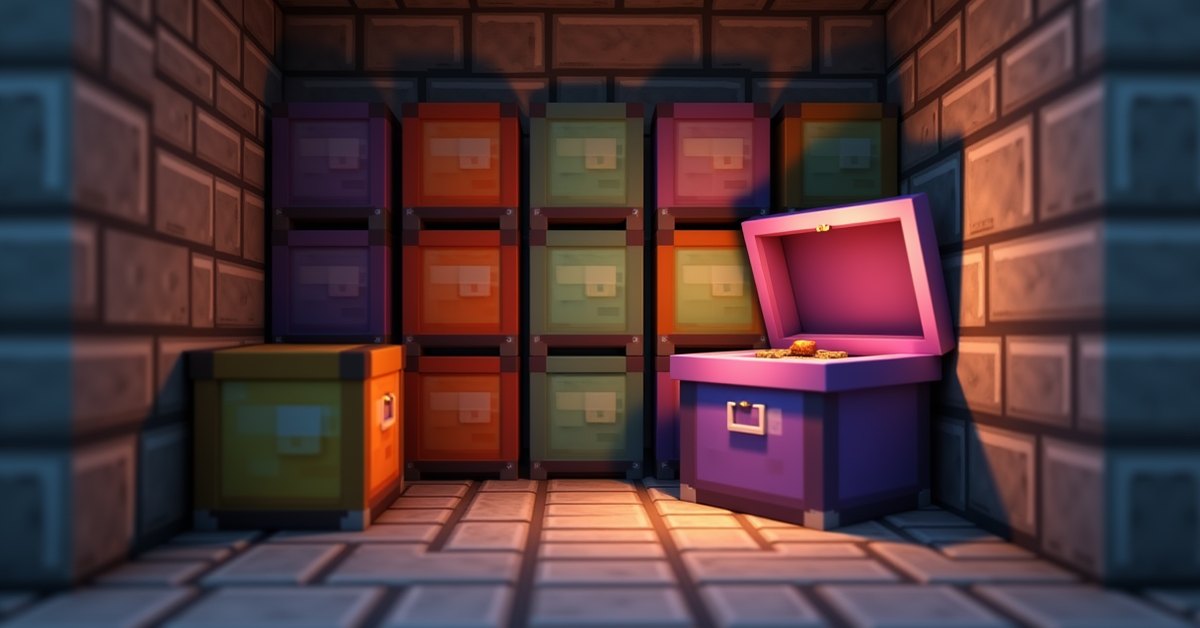
You can color a shulker box with any of the 16 dyes. Put the shulker box anywhere in the crafting grid along with one dye of your choice, and you get that color back. The box keeps its contents through the dyeing process, so you can recolor a full box safely.
You can also re-dye a box that already has a color, switching it straight to another. The one thing you cannot do is return a dyed box to its original undyed look. There is no recipe to strip the color off, so pick a color you are happy with.
Color-coding is the main reason to dye boxes at all. A red box for combat gear and a green box for food is faster to read at a glance than two identical purple boxes.
How shulker boxes work
A few mechanics are worth knowing before you build your storage around shulker boxes.
The headline trait is that a box keeps its contents when broken. Any tool works, though a pickaxe is fastest, and however you mine it the box drops with its full inventory stored inside the dropped item.
Shulker boxes also open against walls. The box opens by sliding its lid outward about half a block, so it does not need a clear space above it the way a chest does. You can tuck boxes into tight wall storage or set them under low ceilings.
A box remembers which surface it was placed against and opens away from it. Set one on the underside of a block and the lid drops downward; set one on a wall and it opens sideways. The orientation is fixed once the box is placed, so decide which way you want it to face before you set it down.
Like a chest, a placed shulker box gives off a redstone signal through a comparator based on how full it is, so you can wire one into a sorting or alert system. Hoppers work too: a hopper feeding into a box loads it, and a hopper underneath pulls items out, which lets you build automatic loaders.
One thing you cannot do is nest them. A shulker box will not go inside another shulker box, so there is no way to fold an entire inventory down into a single slot.
Tips for using shulker boxes
Name your boxes in an anvil before you fill them. A box called “Ores” or “Redstone” shows that label at the top of its inventory screen when you open it, which beats guessing what is inside.
Carry an empty shulker box on long mining trips. When your inventory fills up, place the box, dump everything in, break it, and keep going. You roughly double your effective carry space.
Keep shulker boxes away from lava and fire. If a box drops as an item into lava, it burns and everything inside is gone for good. Treat a full box like it is made of glass when you are near the Nether or open lava.
Store shulker boxes inside chests or your ender chest. Since boxes hold their contents, a chest full of sorted boxes is a compact storage room packed into nine slots.
On a multiplayer server, take what you need from a box and break it again rather than leaving valuables in a placed box at an unsecured spot. Anyone can open a box you leave on the ground.
Java and Bedrock differences
Shulker boxes behave almost the same across both versions. The crafting recipe, the 27 slots, the dyeing, and the keep-contents rule are identical.
The main difference is opening behavior when a box is blocked. In Bedrock Edition, a placed shulker box can open even with a solid block directly in front of its lid. In Java Edition, the lid needs room to extend, and if that space is blocked the box pushes nearby entities out of the way as it opens. For everyday storage this rarely matters, but it can affect tight redstone builds.
Frequently asked questions
Do shulker boxes keep their items when you break them?
Yes. This is the whole point of a shulker box. Break it with any tool or by hand, and it drops as one item with all 27 slots of contents still inside.
Can you put a shulker box inside a shulker box?
No. The game does not allow it. You cannot nest boxes to compress your inventory any further.
How many items does a shulker box hold?
It has 27 slots, the same as a single chest. Each slot holds a full stack, so a box can carry up to 27 stacks of stackable items.
Can you wash the dye off a shulker box?
No. You can recolor a dyed box to a different color, but there is no way to return it to the original undyed purple. A cauldron of water will not remove the color.
What happens if a shulker box falls in lava?
If the box exists as a dropped item and lands in lava, it burns and every item inside is lost. A box you have placed as a block is safer, but never set a full box down next to open lava.
Can hoppers pull items out of a shulker box?
Yes. A hopper placed under a shulker box pulls items out, and a hopper feeding into one loads it. This makes shulker boxes useful in automatic storage systems.
Where do you get shulker shells?
Shulker shells drop only from shulkers, which live in End cities on the outer End islands. There is no crafting recipe for shells, so you have to fight shulkers to collect them.
Can you get a shulker box without going to the End?
No. A shulker box needs two shulker shells, and shells drop only from shulkers in End cities. You have to beat the ender dragon and travel to the outer End islands before you can make one.
A shulker box is the upgrade that changes how you play. Once you can carry 27 stacks in a single slot, mining trips run longer, base moves get easier, and your storage room becomes a row of labeled boxes you grab and go. The trip to the End for shells is worth making as soon as you can manage it.