What experience is in Minecraft
Experience, or XP, is the green bar above your hotbar and the number sitting on top of it. You earn it just by playing: mining ore, killing mobs, smelting, fishing, breeding animals, and trading. That number is your level, and levels are the currency you spend on enchanting, repairing gear at an anvil, and renaming items.
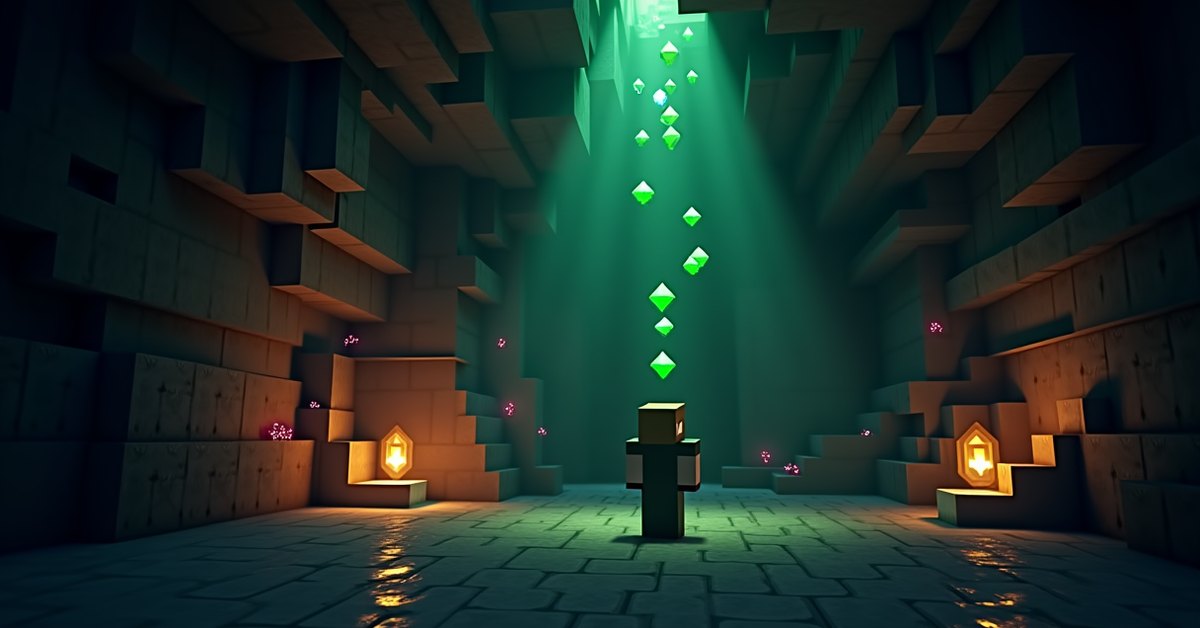
XP shows up in the world as small glowing green orbs. When a mob dies or you break an ore, those orbs pop out and drift toward you if you’re close enough. Each orb adds points to your bar. Fill the bar and the level number ticks up by one.
You can’t bank XP anywhere except in your own bar, with one exception covered below. It isn’t an item you can stack in a chest, so most players spend it as they go rather than hoarding it.
How XP orbs and the bar work
Every orb is worth a set number of experience points. The orbs you see aren’t all the same size; a bigger orb carries more points. When you walk over them or stand close, they fly in and fill the bar.
The bar measures points, but you spend levels. That difference matters, because the points needed to reach the next level keep going up. Early levels are cheap. Later ones cost a lot more.
How much each level costs
The points you need to climb one level depend on the level you’re already at:
- Levels 1 to 16: each level needs
2 x level + 7points. Going from 0 to 1 costs 7 points; 15 to 16 costs 37. - Levels 17 to 31: each level needs
5 x level - 38points. - Level 32 and up: each level needs
9 x level - 158points.
The practical takeaway: getting from level 0 to 30 takes about 1,395 points, and that’s a common target because level 30 unlocks the strongest enchanting table options. Pushing past 30 gets expensive fast, which is why most players enchant at 30 and start over instead of saving up for level 50.
Where experience comes from
XP has a lot of sources, and some give far more than others. Here’s a rough guide to the common ones:
| Source | Approximate XP |
|---|---|
| Diamond or emerald ore | 3 to 7 per block |
| Lapis, redstone, or nether quartz ore | 1 to 5 per block |
| Coal ore | 0 to 2 per block |
| Most hostile mobs | 5 each |
| Passive animals | 1 to 3 each |
| Breeding | 1 to 7 per baby |
| Fishing | 1 to 6 per catch |
| Villager trade | 3 to 6 per trade |
| Bottle o’ enchanting | 3 to 11 per bottle |
| Wither | 50 |
Mining ore
Breaking certain ores drops XP directly. Coal, diamond, emerald, lapis lazuli, redstone, and nether quartz all give experience when you mine them. Diamond and emerald ore give the most per block, usually 3 to 7 points each.
Iron, gold, and copper ore are the exception. They drop raw chunks instead of a finished item, so mining them gives no XP on the spot. You get that experience later, when you smelt the raw ore in a furnace.
Smelting
Pulling smelted items out of a furnace, blast furnace, or smoker grants XP based on what you cooked and how much of it. The game tracks the experience while items sit in the output slot, so a furnace you haven’t emptied in a while can hand you a satisfying burst when you finally collect everything.
Killing mobs
Most hostile mobs drop 5 points when you kill them. Passive animals like cows and chickens give 1 to 3. Baby animals give nothing. The big payouts come from boss fights: the wither drops 50 points, and the ender dragon drops a huge amount the first time you beat it, enough to jump from level 0 well past 60.
One catch: a mob only drops XP if a player landed the killing blow or caused the death. Mobs that die from fall damage, suffocation, or drowning with no player involved usually drop no experience. That’s why good XP farms are built to leave the final hit to you.
Breeding and fishing
Breeding two animals gives 1 to 7 points each time a baby is born, so a working animal farm trickles out experience while it also feeds you. Fishing returns 1 to 6 points per catch, which adds up over a long session at the water with an enchanted rod.
Trading with villagers
Every trade with a villager gives a few points, and the villager sometimes releases a small puff of XP orbs on top of the trade reward. A villager hall set up for cheap, repeatable trades is one of the steadiest XP sources in the game, and it doesn’t put you in any danger to run it.
Bottles o’ enchanting
A bottle o’ enchanting is the one way to carry XP as an item. Throw one and it shatters into 3 to 11 points. You can buy them from cleric villagers, so they double as a way to turn emeralds into experience when you don’t feel like grinding mobs.
How you spend experience
Enchanting
The enchanting table is the main reason to collect XP. Place an item, add lapis lazuli, and pick one of three enchantment options. Each option lists a level requirement, and the table only offers stronger enchantments when you’re a higher level with bookshelves nearby.
You need 15 bookshelves placed one block away from the table to unlock the level 30 options, the best the table offers. Each enchant costs both levels and lapis. The third slot can take up to 3 levels and 3 lapis, but it won’t appear unless your level meets the requirement shown next to it.
Anvils
Anvils use levels to combine enchanted items, repair gear with materials or a second item, apply enchanted books, and rename things. The more work an item has already had done to it, the more each new operation costs. In Survival, once the price hits 40 levels the anvil shows “Too Expensive” and refuses the job, so there’s a hard ceiling on how much you can pile onto one item.
Grindstones and Mending
A grindstone does the opposite of enchanting: it strips enchantments off an item and refunds some of the XP that went into them. It’s a way to recover experience from gear you don’t want anymore.
Mending is an enchantment worth calling out because it changes how XP works for that item. While you’re holding or wearing a tool with Mending, the orbs you pick up go into repairing its durability instead of filling your bar. A full set of Mending gear means your experience quietly maintains your equipment as you play.
Losing XP when you die
Death is the big risk to your experience. When you die, you drop part of your XP as orbs on the ground: 7 points for every level you had, capped at 100 points total. Past level 15 or so you’re always dropping the maximum 100, which is only a small fraction of a high level’s worth.
You have a short window to run back and collect those orbs before they vanish. If you can’t reach them in time, that experience is gone for good. The keepInventory gamerule turns this penalty off and preserves your full level on death, which is why a lot of players switch it on for building-focused worlds.
Java and Bedrock differences
The core system is the same on both versions: same level costs, same bar, same sources for the most part. The points you need per level and the death penalty match up. Small differences exist in how some orbs merge and in exact drop amounts from a few activities, but for everyday play you can treat XP the same way on Java and Bedrock.
Frequently asked questions
How do you get XP fast in Minecraft?
The fastest steady methods are a mob farm that funnels spawns to a spot where you land the killing blow, and a bank of furnaces full of smeltable items. Trading halls and fishing are slower but safer. For a one-time boost, beating the ender dragon hands you more XP than almost anything else in the game.
Can you store experience?
Only as bottles o’ enchanting, which release 3 to 11 points when thrown. There’s no XP chest or battery. Otherwise your level lives in your bar until you spend it or lose it on death.
What level do you need to enchant?
You can enchant from level 1, but the good enchantments need higher levels and bookshelves. With 15 bookshelves around the table, the top option requires level 30, which is the usual target for serious enchanting.
Do you lose all your XP when you die?
No. You drop 7 points per level up to a maximum of 100 points, and you can grab the orbs if you return quickly. Turn on keepInventory to keep everything through a death.
Why doesn’t iron ore give XP?
Iron, gold, and copper ore drop raw material that still needs smelting. The experience is attached to the smelting step instead, so you collect it from the furnace rather than from the ore block.
Does mining redstone give XP?
Yes. Redstone ore drops 1 to 5 points when mined, along with the redstone dust. Coal, lapis, diamond, emerald, and nether quartz ore all give XP the same way.
Getting the most out of experience
The smartest way to treat XP is as a steady utility, not a score to maximize. Set up one reliable source you enjoy, whether that’s a mob farm or a villager hall, enchant at level 30, and put Mending on the gear you use most so your experience keeps it running. That loop covers almost everything you’ll ever need XP for.