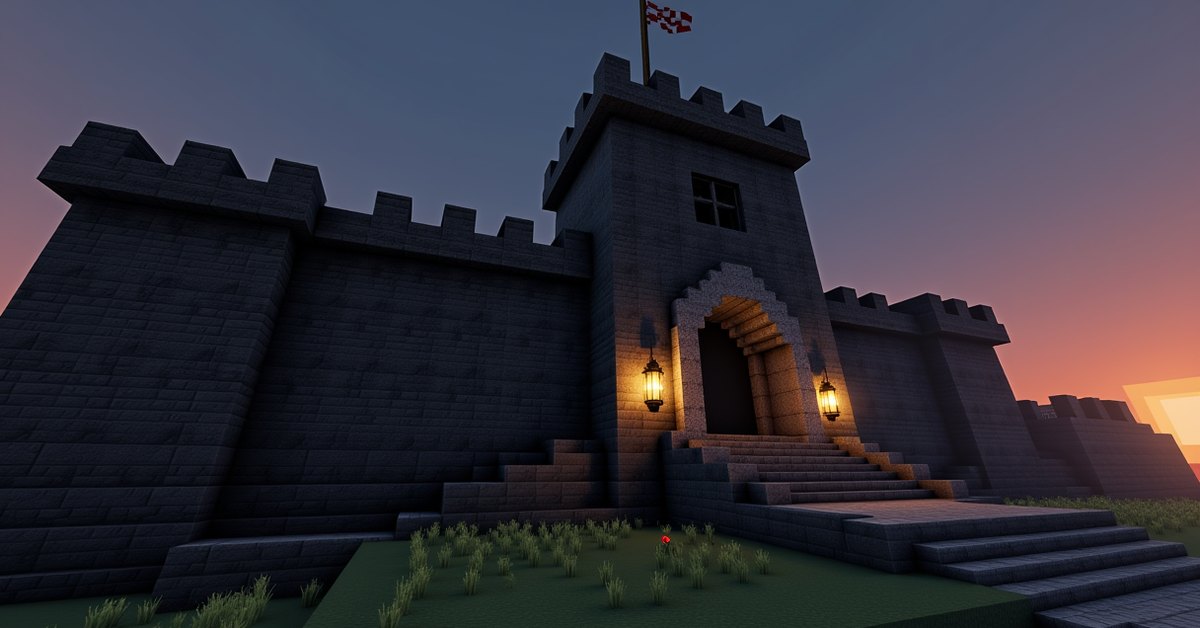
What are polished blackstone bricks?
Polished blackstone bricks are one of the cleanest dark building blocks in Minecraft. They have a tight, uniform brick pattern in near-black stone, which makes them a favorite for castles, fortresses, and anything that needs to look heavy and serious.
The block comes from blackstone, a material the Nether Update added to the lower Nether. You start with raw blackstone, polish it, then turn the polished version into bricks. Each step is a quick crafting recipe, so the whole chain takes seconds once you have the blackstone.
Polished blackstone bricks sit at the end of a three-step refining chain: blackstone becomes polished blackstone, and polished blackstone becomes polished blackstone bricks. The block has the same hardness and blast resistance as regular stone, so it is durable enough for survival builds without being indestructible.
You need a pickaxe to mine it. Break it with anything else and it drops nothing, so keep a pickaxe on you when you are tearing down a blackstone structure. Blackstone and its polished forms only generate in the Nether, but once you bring the blocks back through a portal they behave normally in the Overworld.
How to get polished blackstone bricks
There are three ways to end up with polished blackstone bricks: craft them through the normal recipe, cut them with a stonecutter, or collect them from a structure that already contains them.
Crafting from polished blackstone
The standard recipe is a 2×2 square. First, find blackstone (more on where to look below). Place four blackstone in a 2×2 grid to get four polished blackstone. Then place four polished blackstone in a 2×2 grid to get four polished blackstone bricks.
Both recipes fill a 2×2 square, so you can craft them in the small grid in your inventory. You do not need a crafting table for either step, which is handy when you are mining deep in the Nether.
Using a stonecutter
A stonecutter is the faster route. Drop blackstone into a stonecutter and the menu shows every block you can cut it into, including polished blackstone bricks directly. One blackstone gives one polished blackstone brick, with no intermediate polishing step.
The stonecutter also produces the slab, stair, and wall versions in a single cut, and it wastes nothing. Crafting brick stairs the normal way costs six bricks for four stairs, while the stonecutter turns one block into one stair. If you are short on blackstone, always use the stonecutter.
Finding them in bastion remnants
Bastion remnants are the huge Nether fortresses guarded by piglins, and they are built almost entirely from the blackstone family. Polished blackstone bricks, cracked polished blackstone bricks, gilded blackstone, and chiseled polished blackstone all appear in their walls and floors.
Mining a bastion is a quick way to gather pre-made bricks. The piglins inside attack players who are not wearing gold, so put on at least one piece of gold armor before you start. Breaking ordinary walls will not bother them, though mining gilded blackstone or opening their chests will, so stick to the plain brick blocks if you want a calm trip.
Where to find blackstone
Every polished blackstone brick starts as blackstone, so knowing where the raw block spawns saves a lot of time.
The richest source is the basalt deltas biome, where blackstone forms large patches across the terrain alongside basalt. Blackstone also generates in blobs near the bottom of the Nether, so any deep trip below the netherrack will turn some up.
Basalt deltas are dangerous ground, though. The biome is full of lava pockets and magma cubes, and the uneven basalt pillars make it easy to fall. Bring a fire resistance potion or two if you plan to mine there for any length of time.
Bastion remnants are made of it, as covered above. You can also get blackstone by bartering with piglins: give a piglin a gold ingot and one of the possible rewards is a small stack of blackstone. Bartering is slow if blackstone is all you want, but it adds up while you are farming piglins for other drops.
The polished blackstone brick family
Polished blackstone bricks come with the usual set of building variants, plus one weathered version.
The slab, stairs, and wall are made the same way as any other stone variants. Three bricks in a row give six slabs. Six bricks in the stair pattern give four stairs. Six bricks in the wall pattern give six walls. The stonecutter produces all three at a better ratio.
Cracked polished blackstone bricks are the weathered version. You make them by smelting polished blackstone bricks in a furnace, which gives the block a chipped, broken texture. There is no recipe to turn cracked bricks back into clean ones, so smelt only what you need.
One block that is easy to confuse with this set is chiseled polished blackstone. It has a carved face pattern, but it is made from polished blackstone slabs, not from bricks, and it is a separate block from the brick line. Both share the dark blackstone palette, so they look good side by side even though their recipes differ.
One thing the bricks cannot do is become a button or pressure plate. Those redstone parts come from plain polished blackstone, not the brick version, so set aside some un-bricked polished blackstone if you want matching dark redstone components.
Building with polished blackstone bricks
The appeal of this block is the color. Polished blackstone bricks are nearly black with a faint gray grout line, which reads as clean and formal rather than rough. That makes them strong for castle walls, gatehouses, watchtowers, and any structure meant to look imposing.
The dark base also makes bright blocks pop. Gold blocks, glowstone, lanterns, and crying obsidian all stand out sharply against polished blackstone bricks, which is why bastions pair them with gilded blackstone. For a softer contrast, deepslate bricks and regular stone bricks sit comfortably next to the polished blackstone set.
Because the brick, slab, stair, and wall all share one texture, you can build detailed shapes without the surface looking busy. Slabs work as trim and floor detail, stairs round off roof edges, and walls make convincing fences and battlements.
Tips and common mistakes
Do not confuse blackstone with deepslate. Both are dark, and both have polished and brick forms, but they are different materials from different places. Deepslate comes from deep underground in the Overworld; blackstone comes from the Nether. Their textures differ once you look closely, so check the recipe output before you commit a full build.
Use a stonecutter for any large project. The crafting-table recipes waste material on stairs, and at castle scale that waste becomes several stacks of blackstone you did not need to mine.
Smelt cracked bricks last. Since the change is one-way, build your structure with clean bricks first, then replace the specific blocks where you want a damaged look. That keeps you from accidentally locking good blocks into the cracked texture.
Carry a pickaxe in the Nether even if you are not planning to mine. Blackstone, polished blackstone, and the brick variants all drop nothing when broken by hand, and it is easy to lose a stack of bastion bricks that way.
Frequently asked questions
What is the difference between blackstone and polished blackstone bricks?
Blackstone is the raw block. Polished blackstone is blackstone refined once, with a smooth face. Polished blackstone bricks are the polished version crafted again into a brick pattern. Each step makes the texture tighter and more decorative.
Can you make polished blackstone bricks with a stonecutter?
Yes. Place blackstone or polished blackstone in a stonecutter and polished blackstone bricks appear as one of the cut options. The stonecutter skips the intermediate step and uses material more efficiently than the crafting table.
How do you make cracked polished blackstone bricks?
Smelt polished blackstone bricks in a furnace. The output is cracked polished blackstone bricks. The process is one-way, so there is no recipe to repair them back to clean bricks.
Are polished blackstone bricks blast resistant?
Not especially. They have the same blast resistance as ordinary stone, so a creeper or TNT will break them like any normal building block. If you need a blast-proof material, obsidian is the block to use.
Where do polished blackstone bricks generate naturally?
They appear in bastion remnants in the Nether, where they form much of the walls and floors. You will not find them generating in the Overworld, but you can carry crafted or mined bricks anywhere.
Do you need a pickaxe to mine polished blackstone bricks?
Yes. Any pickaxe works, including a wooden one. If you break the block with your hand or another tool, it drops nothing.
Is polished blackstone the same as chiseled polished blackstone?
No. Chiseled polished blackstone is a separate block with a carved pattern, crafted from polished blackstone slabs. It is not part of the brick recipe chain, though it shares the same dark color.
Final thoughts
Polished blackstone bricks reward a single Nether trip with a full building set in one of the game’s best dark palettes. Grab a stack of blackstone from a basalt delta or a bastion, keep a stonecutter handy, and you can wall off an entire fortress without a second run.