What the Luck effect is
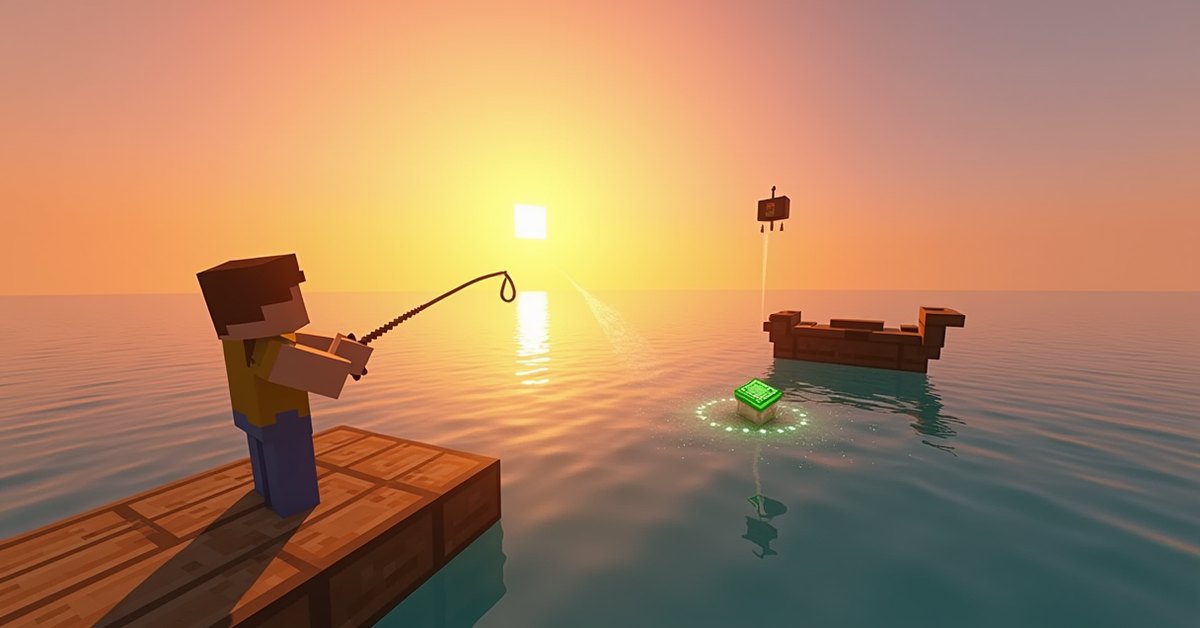
Luck is a status effect that improves your odds of pulling better items out of certain loot tables. In practice, that means one thing in survival Minecraft: fishing. When Luck is active, you catch more treasure and less junk.
Each level of Luck adds +1 to your generic.luck attribute. That attribute feeds into how the game rolls loot, nudging the results toward the good stuff. The effect is subtle, so you won’t see a dramatic difference on a single cast, but over a long fishing session it adds up.
One thing to know up front: Luck is a Java Edition effect. Bedrock has leftover potion textures in its files but no working Luck effect. The rest of this guide covers how it behaves in Java, with a note on Bedrock near the end.
How Luck changes fishing loot
Every time you reel in a catch, the game picks from three pools: fish, treasure, and junk. Fish are the common result. Treasure is the rare, valuable pool (enchanted books, name tags, saddles, nautilus shells, bows, and enchanted fishing rods). Junk is the pile of low-value drops like leather boots, sticks, bones, and rotten flesh.
Your luck attribute does two things to that roll. It raises the weight of loot entries that carry a high quality score, and it increases the chance of bonus rolls happening. Treasure entries have a positive quality value, so more luck pushes the odds toward treasure. Junk entries carry a negative quality value, so the same luck pushes you away from them.
The treasure pool is the reason anyone bothers. It holds the items worth a long fishing session:
- Enchanted book (any enchantment, any level)
- Enchanted fishing rod
- Enchanted bow
- Name tag
- Nautilus shell
- Saddle
The junk pool is everything you’d rather not reel in: leather and leather boots, damaged fishing rods, sticks, string, bowls, bones, ink sacs, tripwire hooks, rotten flesh, and lily pads. Luck thins that pool out for you.
The result is a better catch rate on the items worth having and a lower catch rate on trash. If you fish for enchanted books or a mending rod, Luck stacks with the Luck of the Sea enchantment to speed that grind along. The gain per session is small on paper, but on a long AFK-free fishing run it turns into a real difference in how many name tags and enchanted books end up in your chest.
How to get the Luck effect
There’s no brewing recipe you can stumble into during a normal survival world. Every route to Luck runs through commands, creative mode, or an item that only exists once you turn cheats on.
Using the effect command
The simplest way to apply Luck is the effect command. In a world with cheats enabled, run:
/effect give @s minecraft:luck 300 0
That gives you Luck for 300 seconds at amplifier 0, which is Luck I. Bump the last number to raise the level. Amplifier 4 (/effect give @s minecraft:luck 300 4) gives Luck V and adds +5 to your luck attribute. Swap @s for @p or a specific player name to target someone else on the server instead of yourself.
Potion of Luck
A Potion of Luck grants Luck I for five minutes when you drink it. The potion exists in Java, but you can’t brew it and it won’t show up in survival on its own. You can pull it from the creative inventory search, or spawn one with the give command. On current versions the command looks like this:
/give @s minecraft:potion[potion_contents={potion:"luck"}]
Older versions used the tag format /give @s minecraft:potion{Potion:"luck"}, so the exact syntax depends on which version you’re running. Once you have the potion, it behaves like any other: drink it and the effect lasts its full duration or until you die.
Splash, lingering, and tipped arrows
You can convert a Potion of Luck into other forms at a brewing stand. Add gunpowder to make a Splash Potion of Luck you can throw, or dragon’s breath after that for a Lingering Potion of Luck that leaves a cloud. Tip an arrow with the lingering version to craft an Arrow of Luck, which applies the effect to whatever it hits. These are handy on a multiplayer server if you want to hand out Luck without everyone typing commands.
Luck vs. Luck of the Sea
These two get mixed up constantly because they touch the same activity. They are not the same thing.
Luck of the Sea is a fishing rod enchantment. It raises your luck attribute while you’re holding that rod, and it only matters for fishing. The Luck status effect is a timed buff you drink or apply with a command, and it raises the same attribute for as long as it lasts, no matter what you’re holding.
Because both feed the same generic.luck attribute, they stack. A rod with Luck of the Sea III plus a Potion of Luck gives you a higher combined luck value than either one alone, which is the fastest legitimate setup for treasure fishing. Note that Luck of the Sea also lowers your enchanted-book and enchanted-rod odds slightly in exchange for more treasure overall, so the two aren’t identical under the hood even though both help.
Java vs. Bedrock
Luck works in Java Edition and does nothing in Bedrock Edition. Bedrock’s files contain unused textures for Luck potions, which is why you’ll see people ask where to find them, but the effect was never wired up. If you’re on Bedrock and want better fishing results, Luck of the Sea on your rod is the only tool available to you.
There’s also an opposite effect worth knowing about. Bad Luck, sometimes called Unluck, uses the ID minecraft:unluck and lowers your luck attribute instead of raising it. It’s the same idea in reverse and, like Luck, is a Java-side effect you apply with commands.
Tips and common mistakes
Fish in the open with clear sky above the bobber if you want to fish faster, though rain and line-of-sight affect bite speed rather than loot quality. Luck changes what you catch, not how quickly you catch it, so pair it with an efficient fishing spot to make the buff count.
Don’t expect miracles from a single level. Luck I adds one point to an attribute that the loot math treats gently. Stacking a higher amplifier through commands, or combining the potion with an enchanted rod, is where you’ll actually notice the difference in a treasure count.
If you’re building a data pack or map and want a fair “lucky” reward, remember that fishing is the only vanilla loot table the luck attribute touches. Chest loot, mob drops, and block drops ignore it unless you write custom loot tables that check for quality and bonus rolls yourself. This trips up a lot of mapmakers who expect Luck to improve dungeon chests or mob drops out of the box.
Watch the duration if you’re using the drinkable potion rather than the command. Five minutes goes fast when you’re fishing, and there’s no in-game warning as it runs down. Keep an eye on the effect icon in the corner of your screen, or set a long custom duration through the command so you don’t have to think about it.
Frequently asked questions
Can you get the Luck effect in survival without cheats?
No. Every source of the Luck effect (the potion, its splash and lingering versions, and the arrow) is unobtainable in survival unless cheats are on or you pull the item from creative. Luck of the Sea on a rod is the only cheat-free way to raise your luck for fishing.
How long does a Potion of Luck last?
Five minutes when you drink the standard potion. Applying the effect through the command lets you set any duration you want in seconds.
Does Luck help with chest loot or mob drops?
No. In vanilla Minecraft, fishing is the only loot table that reads the luck attribute. Chests, mobs, and mined blocks aren’t affected.
Is the Luck effect in Bedrock Edition?
No. Bedrock has unused Luck potion textures but no functioning effect. Only Java Edition uses it.
Does Luck stack with Luck of the Sea?
Yes. Both raise the same luck attribute, so a Potion of Luck and a Luck of the Sea rod together give you a higher total than either one on its own.
What’s the command to give yourself Luck?
Run /effect give @s minecraft:luck 300 0 for five minutes of Luck I. Change the final number to raise the level.
Is it worth using
Luck is a niche tool with one real job, and it does that job quietly. If you’re chasing treasure from a fishing rod, stacking it on top of Luck of the Sea is a genuine edge. For anything else, it sits in the commands-and-datapacks corner of the game, useful to mapmakers and worth knowing about the next time someone asks why their Bedrock world can’t brew it.