What is a ruined portal in the Nether?
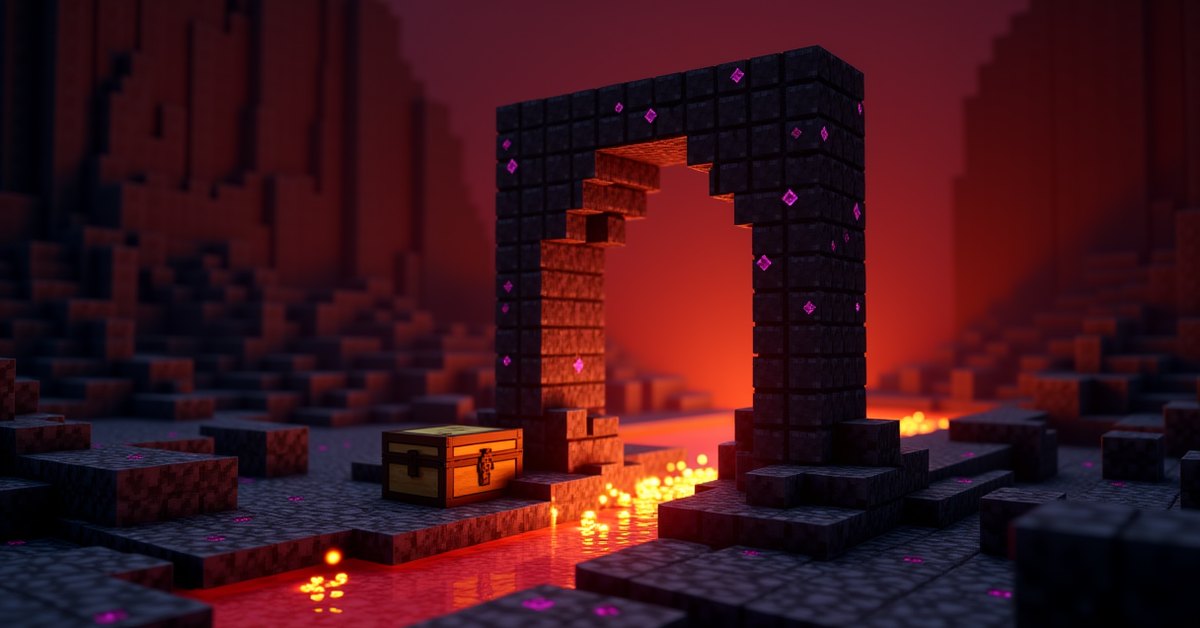
A ruined portal in the Nether is a broken, half-built Nether portal that generates naturally in the Nether dimension. It looks like someone started a portal, gave up, and left it to decay: cracked obsidian, patches of crying obsidian, and a scatter of gold blocks and netherrack around the frame.
These structures are worth finding because almost every one comes with a loot chest, and the chest can hold gold gear, obsidian, flint and steel, and sometimes a golden apple. The frame itself is a free source of obsidian and crying obsidian, which you would otherwise have to mine or craft.
Ruined portals arrived in the 1.16 Nether Update and spawn in both the Overworld and the Nether. This guide covers the Nether version: where it appears, what it’s built from, what the chest drops, and whether repairing one is worth your time.
How a Nether ruined portal is put together
A ruined portal is a decayed version of the standard Nether portal frame. Instead of a clean obsidian rectangle, it generates with missing blocks, some obsidian swapped for crying obsidian, and chunks of gold and netherrack fused into it. The damage is cosmetic in one sense, because all the blocks are real and mineable, but the frame is never complete, so the portal is never lit when you find it.
In the Nether, these portals blend into the terrain. The surrounding netherrack, magma blocks, and gold are easy to walk past if you are not looking. The giveaway is the tall dark obsidian frame and the loot chest tucked somewhere in or under the structure.
Where Nether ruined portals generate
Nether ruined portals can appear in every Nether biome: nether wastes, crimson forest, warped forest, soul sand valley, and basalt deltas. They generate at a range of heights and orientations, so you might find one sitting on the surface, buried in a netherrack hill, or hanging off the side of a cliff over a lava ocean.
Position varies a lot. Some are fully exposed and easy to loot. Others are mostly buried, with only a corner of obsidian poking out, and you have to dig to reach the chest. A few generate partly inside lava, which makes recovering the loot risky without fire resistance.
They come in two rough sizes. Small portals use a compact frame and a small pile of surrounding blocks. Large ones use a giant frame and a much bigger debris field, with more gold blocks and a better chance at a strong chest. If you are choosing which one to dig out, the bigger frame is almost always the better haul.
What blocks a Nether ruined portal is made of
The frame is built from obsidian and crying obsidian in a random mix. Crying obsidian is the purple-flecked block that drips light particles, and it is the reason ruined portals are a good early source of it. You need six crying obsidian to craft a respawn anchor, and a single portal often hands you most of that in one place.
Around and under the frame you will find:
- Netherrack, forming the blob the portal is embedded in
- Magma blocks, which deal damage if you stand on them
- Gold blocks, usually one to four, that break into a full block you can carry or split into nine ingots
- Obsidian and crying obsidian from the frame itself
Mining the gold blocks is often the fastest reason to visit. Each one breaks with any pickaxe of iron tier or better, and a large portal can carry several of them. That is a quick pile of gold for bartering with piglins without ever touching a bastion.
What’s in the loot chest
Every ruined portal generates with one loot chest, though it can be buried in the netherrack or hidden under the structure. The loot leans heavily toward gold and portal-related items. Common finds include gold nuggets and ingots, golden tools and armor, obsidian, flint and steel, and fire charges.
The rarer rolls are the ones worth hunting for. A ruined portal chest is one of the few places you can pull an enchanted golden apple out of a chest, and it can also drop a plain golden apple, a bell, or a clock. Here are the notable items and why each one is useful:
| Item | Why it matters |
|---|---|
| Enchanted golden apple | Rare roll; strong healing and resistance buff that is hard to get elsewhere |
| Golden apple | Reliable emergency heal |
| Flint and steel | Lights the portal you just found |
| Obsidian | Repairs the frame or builds a fresh portal |
| Gold blocks and ingots | Bartering material and crafting stock |
| Bell | Decorative, otherwise a village-only block |
Gold gear from these chests sometimes comes lightly enchanted, which makes it handy for cheap early tools or as bartering fuel. Do not expect diamonds. The loot table is built around gold and utility, not top-tier equipment, so treat a good chest as a bonus rather than a jackpot.
How to repair and light a Nether ruined portal
Repairing a ruined portal is the same job as fixing any broken Nether portal. Fill in the missing frame blocks with obsidian so you have a complete rectangle, at minimum four wide by five tall including the corners, then light the inside with flint and steel.
You can leave the crying obsidian in the frame. Crying obsidian works as a portal frame block exactly like normal obsidian, so you only need to patch the gaps where blocks are missing entirely. The chest often supplies both the obsidian and the flint and steel to finish the job.
There is a catch worth knowing before you bother. A Nether-side portal links back to the Overworld, so lighting a ruined portal here creates a travel point to the surface, not a shortcut deeper into the Nether. If you already run a portal network, a fresh portal at this spot may drop you far from your Overworld base.
Nether vs. Overworld ruined portals
The two variants share a loot table and a look, but a few things set them apart. Overworld ruined portals can generate underwater, on mountains, or in deserts, and they usually sit next to a small patch of netherrack and magma that stands out against the local terrain. In the Nether, that netherrack blends in, so the portals are harder to spot at a glance.
The bigger practical difference is where a repaired portal sends you. Light an Overworld ruined portal and you open a route into the Nether. Light a Nether one and you open a route back to the Overworld. If you are setting up a portal network, the edition of the portal you fix decides which direction you are opening.
Tips and common mistakes
Watch your footing. Magma blocks are part of almost every ruined portal, and standing on one without a fire resistance buff or frost walker boots will chip away at your health while you loot. Sneak across them or break them first.
Look for the chest before you leave. It is easy to grab the gold blocks and walk off without realizing the chest is buried a block or two under the netherrack. If you do not see it, dig around and below the frame until you do.
Mine the crying obsidian if you carry a diamond or netherite pickaxe. It is slow to break, but a respawn anchor is one of the only ways to set a spawn point in the Nether, and free crying obsidian saves you a trip to a bastion or a long gold-bartering session.
Bring fire resistance if you can. Many Nether ruined portals sit next to lava, and a potion of fire resistance turns a risky dig into a safe one.
Java vs. Bedrock differences
The structure generates the same way on both editions, and the loot pools are close. The exact chest odds differ slightly between Java and Bedrock, so the same portal type can feel a little more or less generous depending on your version. The block layout, the two size classes, and the overall loot theme are identical, so nothing about how you find or repair one changes.
Frequently asked questions
Do all ruined portals have a chest?
Yes. Every ruined portal generates with exactly one loot chest. If you cannot see it, it is buried in or under the netherrack around the frame, so dig before you move on.
Can you use a ruined portal to travel?
Once you repair the frame and light it, yes. A ruined portal in the Nether becomes a working Nether portal that links to the Overworld. You complete the obsidian rectangle and light it with flint and steel.
Is the crying obsidian worth mining?
If you want a respawn anchor, yes. You need six crying obsidian for one anchor, and ruined portals are one of the easiest early sources. Mining it takes a diamond or netherite pickaxe.
Can you find an enchanted golden apple in a ruined portal?
Yes, but it is rare. The ruined portal chest is one of the few loot tables that can roll an enchanted golden apple, so it is a nice surprise rather than something to plan around.
What tool do you need for the gold blocks?
An iron pickaxe or better. A stone or wooden pickaxe will break the gold block without dropping anything, so bring at least iron before you start mining.
Why does my repaired portal link to the wrong place?
Nether portals link by coordinates, so a portal lit deep in the Nether can connect to an Overworld spot far from your base. If placement matters, work out the linked coordinates before you commit to using it.
A Nether ruined portal is a quick, low-risk stop: grab the gold, pull the chest, and mine the crying obsidian for a future respawn anchor. Repairing one only makes sense if you actually want a new link to the Overworld from that spot. Otherwise, treat it as a loot pile and keep moving.