What a fossil is
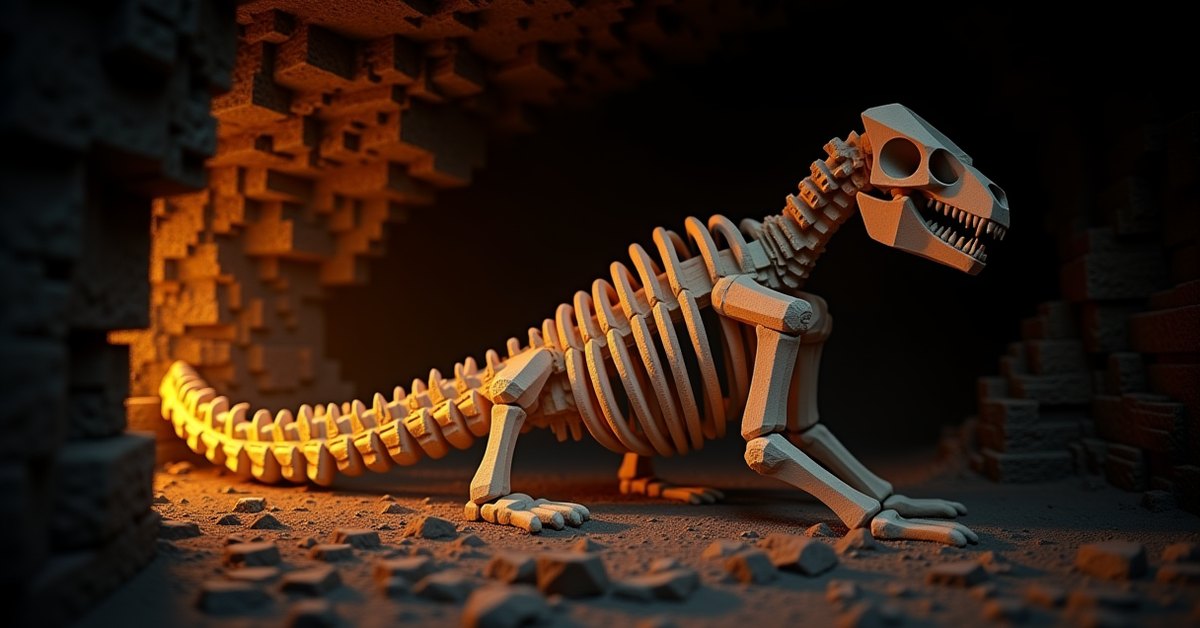
A fossil in Minecraft is a rare structure that looks like the buried skeleton of a giant creature. You get curved ribs, long spine sections, and sometimes a skull-like shape, all made out of blocks. They are decoration that the world generator drops in for you, and they double as a small stash of useful materials.
Overworld fossils are built from bone blocks, with a handful of those bone blocks swapped out for coal ore. That mix is what makes them worth digging into: bone blocks break down into bone meal, and the coal ore gives you coal and a bit of experience.
Because they generate underground and at random angles, you rarely see a whole fossil at once. Most players spot one when a cave, ravine, or their own mining tunnel happens to slice through a rib or a run of bone blocks.
Where fossils generate
There are two kinds of fossil, and they live in very different places.
Overworld fossils
Overworld fossils spawn underground in desert and swamp biomes, including their variants such as mangrove swamp. They sit buried in stone, dirt, and sand, usually well below the surface, so the ground above them looks completely normal. Nothing on the surface marks the spot.
There are four different overworld fossil shapes, and each one generates at a random orientation. One might lie flat like a ribcage, another might tilt on its side, and a third might be mostly sunk into bedrock with only a corner reachable. This randomness is why two fossils almost never look the same.
The blocks you find here are bone blocks plus a few coal ore blocks scattered through the shape. The coal ore is the reason a fossil is worth a detour rather than just a photo.
Nether fossils
Nether fossils are a separate structure. They generate in the soul sand valley biome and sit right out in the open on the surface of the terrain, so you can see them from a distance across those wide, bone-colored valleys.
The big difference: nether fossils are made only of bone blocks. There is no coal ore in them at all. They tend to be larger and more spine-like than the overworld version, which makes soul sand valleys a fast place to gather bone blocks in bulk without any digging.
How common are fossils?
Fossils are uncommon, but they are not on the level of a woodland mansion or an ancient city. In a desert or swamp world you can expect them scattered underground here and there, though you will pass over most of them because they are buried and give no sign at the surface. Soul sand valleys tend to show fossils more often simply because those structures sit in plain view, so the Nether feels like the easier place to run into one.
They also generate in a fixed set of shapes rather than being fully random, so once you have cleared a few you start to recognize the ribcage and spine layouts on sight. That familiarity makes them quick to harvest. You can tell at a glance which way the structure runs and where the coal ore is likely to be hiding.
How to find a fossil
Fossils are not marked on maps and they do not glow or make noise, so finding one comes down to being in the right biome and doing a lot of looking.
In the Overworld, the reliable approach is to mine under a desert or a swamp. Strip mining, branch mining, or just exploring cave systems below those biomes will eventually cut into one. When you see a straight run of bone blocks where you would expect stone, you have found the edge of a fossil. Follow it and dig out the rest.
In the Nether, it is much easier. Head to a soul sand valley and scan the surface. The pale skeletal arches stand out clearly against the soul sand and blue fire, so you can often walk right up to one without touching a pickaxe until you arrive.
If you want to guarantee a find rather than hunt, a world with cheats on lets you use the locate command. Running /locate structure fossil in Java Edition points you to the nearest one and saves the search.
What you get from a fossil
The value of a fossil is in the two block types it holds.
Bone blocks break with any pickaxe. If you mine one without a pickaxe it drops nothing, so bring at least a wooden one. Each bone block can be crafted into 9 bone meal, which makes a single fossil a decent chunk of fertilizer for farms, trees, and dye.
Coal ore (in overworld fossils only) also needs a pickaxe. Mined normally it drops one piece of coal and a little experience. Fortune raises the coal yield, and Silk Touch lets you collect the ore block itself if you want to keep it intact for a display or a later payout.
A single overworld fossil will not make you rich, but the free coal and the pile of bone meal are a nice bonus for the time it takes to clear one out. Nether fossils give you bone blocks only, but often in much larger quantity.
What to do with the loot
Bone meal is the main prize. Nine of it comes out of every bone block, and bone meal grows crops instantly, speeds up saplings and bamboo, and crafts into white dye. If you run a big farm, one fossil worth of bone blocks goes a long way.
You can also keep bone blocks whole. They are a clean off-white building block with a subtle stripe, good for building your own giant skeletons, pale accents, or decorative ruins. Placing a bone block lets you set its direction the way you would a log, so you can line up the grain across a wall.
Bone blocks are also a compact way to store bone meal. Nine bone meal packs into one block, so a double chest of bone blocks holds far more fertilizer than a chest of loose bone meal. If you run an automatic farm that consumes bone meal, keeping a few stacks of bone blocks on hand and crafting them down as needed saves a lot of inventory space.
The coal from overworld fossils goes straight into torches and furnace fuel, the same as any other coal. Nothing special happens because it came from a fossil, but free fuel is free fuel.
Tips and common mistakes
Bring a pickaxe. This is the mistake that costs people a whole fossil: punching bone blocks or coal ore by hand destroys them and drops nothing. Even a wooden pickaxe is enough to save the loot.
Light the area before you dig in. Overworld fossils sit in dark cave zones where hostile mobs spawn, and a nether fossil in a soul sand valley can have skeletons wandering nearby. Place a few torches first so you are not fighting and mining at the same time.
Do not expect diamonds. Fossils look like treasure, but they only ever contain bone blocks and (in the Overworld) coal ore. There is no hidden loot chest and no rare block buried in the center.
Finally, remember that a fossil does not come back. Once you mine it out, that structure is gone for good in that spot. If you like how one looks, take a screenshot or leave part of it standing before you harvest the rest.
Frequently asked questions
What biome do fossils spawn in?
Overworld fossils spawn underground in desert and swamp biomes and their variants, such as mangrove swamp. Nether fossils spawn on the surface in soul sand valley biomes.
Do fossils contain diamonds?
No. Overworld fossils are made of bone blocks and coal ore only. Nether fossils are bone blocks only. There are no diamonds, no chests, and no hidden rare blocks inside a fossil.
What tool do I need to mine a fossil?
Any pickaxe works for both bone blocks and coal ore. Without a pickaxe, those blocks drop nothing when you break them, so never mine a fossil by hand.
How do I get bone meal from a fossil?
Mine the bone blocks with a pickaxe, then craft each bone block into 9 bone meal. One fossil can yield a large stack of bone meal this way.
Can I find a fossil on the surface?
Only in the Nether. Nether fossils generate above ground in soul sand valleys and are easy to spot. Overworld fossils are always buried and only show up where a cave or your mining cuts into them.
How do I locate a fossil quickly?
In Java Edition with cheats enabled, run /locate structure fossil to get the coordinates of the nearest fossil. Otherwise, mine under deserts and swamps or scan soul sand valleys by eye.
Do fossils regenerate after I mine them?
No. A fossil is placed once, when the surrounding chunk first generates. After you mine one out, that spot stays empty for good. New fossils only turn up in fresh chunks you have not explored yet.
Worth the detour
A fossil is one of those small finds that rewards curiosity. It will not change your run the way a stronghold or an ancient city might, but a free run of coal and a wall’s worth of bone blocks is a good reason to keep a pickaxe handy whenever you are digging under a desert or crossing a soul sand valley. If you build, the bone blocks alone are worth carrying home.