What a ruined portal is
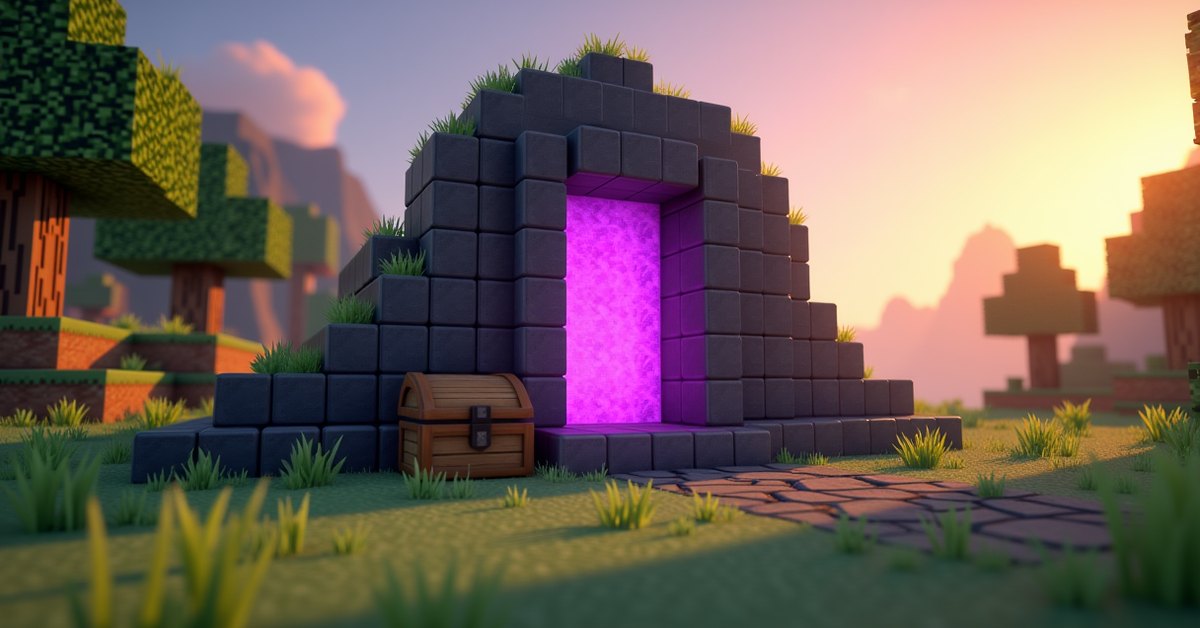
A ruined portal is a broken, half-decayed nether portal that generates naturally in the Overworld. It looks like someone built a portal long ago and let it fall apart: cracked obsidian, patches of crying obsidian, a scatter of netherrack, and usually a chest sitting nearby with loot inside.
In a new world, a ruined portal is one of the most useful things you can stumble onto. It hands you free obsidian, a chance at flint and steel, and sometimes gold and enchanted gear from the chest. Repair the frame and you have a working route to the Nether without mining a single diamond.
Ruined portals arrived in the 1.16 Nether Update and show up in almost every Overworld biome. This guide covers the Overworld version. Ruined portals also generate in the Nether, but their loot and placement work a little differently.
Where ruined portals generate
Overworld ruined portals can appear in nearly any biome, from plains and forests to deserts, oceans, and snowy mountains. They spawn across a wide range of heights, so you might find one sitting on the surface, buried in a hillside, tucked into a cave, floating in the air, or partly sunk underwater.
Because they generate at so many depths, plenty of ruined portals stay hidden. Part of a frame poking out of a cliff or a single block of netherrack on the ground is often the only hint that a larger structure sits behind or below it. If you see stray netherrack or magma blocks out in a normal biome, dig around. There is usually a portal attached.
Size varies a lot too. Some are tiny, just a few blocks tall with no complete frame. Others stand well above the ground with gold blocks built into the structure. The bigger portals tend to carry better loot in their chests.
What blocks make up a ruined portal
A ruined portal is built from a short list of blocks, and each one is worth grabbing:
- Obsidian forms the working part of the frame. Mine it with a diamond or netherite pickaxe and reuse it anywhere.
- Crying obsidian is mixed into the frame as decoration. It gives off purple particles and cannot carry a portal on its own, but it is the key ingredient for a respawn anchor.
- Netherrack is scattered around the base like burnt ground. It catches fire easily and keeps burning, so watch your step.
- Magma blocks dot the structure and hurt you when you stand on them. Sneak to avoid the damage.
- Gold blocks appear on larger portals. Mine them with an iron pickaxe or better and craft each one back into nine gold ingots.
Most ruined portals also generate with a chest, and that chest is the real prize.
The loot chest
Nearly every ruined portal comes with a chest somewhere in or beside the structure. Sometimes it sits in plain view. Other times it is buried under the netherrack or set a block or two into the ground, so poke around before you move on.
The chest pulls from a loot table that leans heavily on gold and portal-building supplies. Common finds include gold nuggets, iron nuggets, flint and steel, a fire charge, obsidian, and golden tools or armor that are often enchanted. Rarer pulls include gold ingots, a clock, a glistering melon slice, and other gold odds and ends.
The standout drop is the golden apple, with a small chance at an enchanted golden apple. Finding one of those in the first hour of a world is a real head start. Even the plain loot matters early, because flint and steel plus a repaired frame means you can enter the Nether almost right away.
Loot scales with the portal. The larger ruined portals, the ones with gold blocks worked into the frame, roll on a richer table than the small broken ones, so a big portal is worth the extra digging to reach its chest. If you have two portals close together, clear the bigger one first.
How to repair and light a ruined portal
A ruined portal is not active when you find it. To turn it into a working nether portal, you need to rebuild the frame into a valid shape and light it.
Step 1: fill in the frame with obsidian
A nether portal needs a rectangular obsidian frame at least four blocks wide and five blocks tall, which leaves a two-by-three opening on the inside. The corner blocks are optional, so you can skip them to save obsidian. Replace any missing frame blocks with obsidian you mined or brought with you.
Step 2: swap out the crying obsidian
This is the mistake that traps most players. Crying obsidian looks like part of the frame, but a portal will not light if crying obsidian sits in a frame position. Pull those blocks out and set regular obsidian in their place. Keep the crying obsidian; you can craft a respawn anchor with it later.
Step 3: light the inside
Use flint and steel or a fire charge on the bottom inside edge of the frame. The purple portal fills the opening, and you are ready to step through. If the chest handed you flint and steel, you did not have to craft a thing.
Tips and common mistakes
Grab the gold blocks. On a large portal they are easy to overlook, but each one is nine gold ingots, a strong return for a few seconds of mining.
Mind the magma blocks. They deal damage over time when you stand on them, and they blend in with the dark blocks around the portal. Sneaking stops the damage if you have to cross one.
Keep fire away from the netherrack. Netherrack burns forever once lit, so a stray spark or a spreading fire can turn the whole structure into a bonfire. That is handy if you want it gone, and a problem if you are standing in it.
Do not assume a portal is faulty when it will not light. Check the frame first. Nine times out of ten the culprit is a crying obsidian block still sitting where regular obsidian belongs.
If you find a ruined portal underwater, the chest is still down there. Bring a way to breathe or a bucket to clear the water so you can open it.
Java and Bedrock differences
Ruined portals work almost the same on both editions, with two differences worth knowing. The loot tables are not identical, so the exact odds on gold gear and golden apples vary a little between Java and Bedrock. Bedrock chests can also include a bell, which Java chests do not.
The structure itself, the frame rules, and the repair process are the same on both. If you know how to fix one, you know how to fix them all.
Frequently asked questions
Can you light a ruined portal without fixing it first?
Only if the frame already forms a valid rectangle of regular obsidian. Most ruined portals are missing blocks or have crying obsidian in the frame, so you almost always have to repair one before it will light.
Why won’t my ruined portal light?
The usual cause is crying obsidian left in the frame. It cannot hold a portal. Replace every crying obsidian block in a frame position with regular obsidian, then try again.
Do all ruined portals have a chest?
Almost all of them do, but the chest can be hidden under netherrack or buried a block into the ground. If you do not see one right away, dig around the base of the structure.
Can you mine the obsidian from a ruined portal?
Yes. Use a diamond or netherite pickaxe to collect the obsidian and the crying obsidian. It is a fast way to gather obsidian without a lava-and-water setup.
Is crying obsidian useful?
Yes. You cannot build a portal with it, but you can combine crying obsidian with glowstone to craft a respawn anchor, which sets your spawn point in the Nether.
How do I find a ruined portal quickly?
With cheats on, the locate command points you at the nearest one. Type /locate structure minecraft:ruined_portal and the game returns the coordinates of the closest ruined portal so you can travel straight to it. In survival without cheats, watch for stray netherrack, magma blocks, and dark obsidian breaking up an otherwise normal biome, since those are the surface tells of a portal hiding nearby.
Are ruined portals a safe way to reach the Nether?
The portal is safe once you repair and light it. The risk is what waits on the other side, since you never know where the linked Nether portal drops you. Step through ready for a fight.
Worth the detour
A ruined portal is one of the best early finds in any world. It shortcuts your trip to the Nether, hands you gold and obsidian for free, and every so often drops an enchanted golden apple you would otherwise have to go hunting for. When you spot that broken frame and a scatter of netherrack, it is almost always worth stopping to dig in.