What a shipwreck is
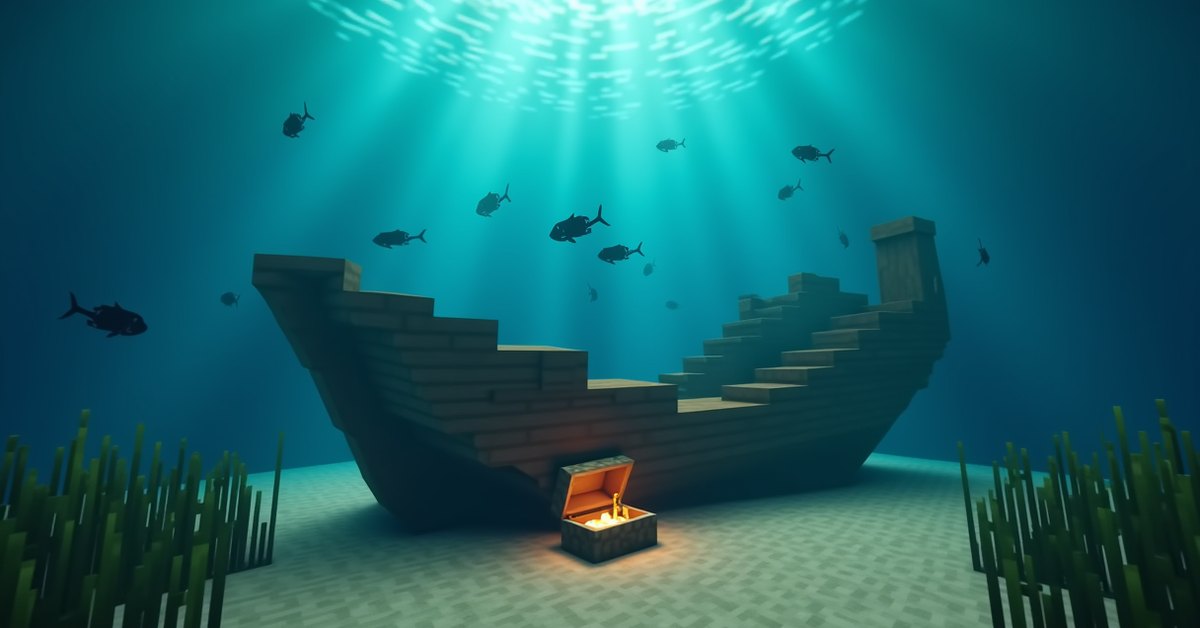
A shipwreck is a broken wooden ship that generates in Minecraft’s oceans and along beaches. It’s one of the best early-game finds in the game because it can hold up to three loot chests, and one of those chests often points you toward buried treasure.
Shipwrecks arrived with the Update Aquatic in Java Edition 1.13 and the matching Bedrock update. You don’t need any special gear to raid one, which makes a shipwreck a strong target on a fresh survival world when you’re still short on iron and food.
Each wreck is a prebuilt structure made mostly of wood planks. Some sit fully intact on the seabed, others are snapped in half, and a few land upside down. What’s inside matters more than the shape, so once you spot one, your job is to find the chests before your air runs out.
Where to find shipwrecks
Shipwrecks generate in every ocean biome, from warm oceans to frozen ones, and they also appear on beaches. That gives you two very different ways to run into one.
Underwater wrecks rest on the ocean floor, sometimes buried partway in sand or gravel. In deep oceans they can sit far below the surface, so you’ll want a way to breathe before you dig in. Beached wrecks sit on or near the sand at the waterline, fully exposed and easy to loot without ever going under.
Orientation is random. A wreck can stand upright, tilt on its side, or flip completely over. Upside-down wrecks hide their chests in what used to be the ceiling, so check every level of the hull, including the raised stern and the lower cargo hold.
Because oceans are huge, the fastest way to cover ground is a boat on the surface and a good look down through the water. Clear water and daytime help a lot. If you’re exploring a warm or lukewarm ocean, coral and sea grass can hide a hull, so slow down when the seabed gets busy.
How many chests a wreck has
A single shipwreck can generate with up to three chests, but not every wreck gets the full set. Some spawn with two, some with one, and a few with none at all. The three possible chests are the treasure chest, the supply chest, and the map chest, and each sits in a different part of the ship.
The treasure chest usually generates in the stern, the raised back end of the ship. The supply chest tends to sit in the front cargo area. The map chest is often up in the captain’s quarters near the top. If a wreck is broken apart, a missing section means a missing chest, so a half-buried or shattered hull may simply have fewer chests to give.
What loot the chests hold
Each chest type pulls from its own loot table, so it helps to know what you’re hoping to pull from which one.
The supply chest
The supply chest is your food and materials chest. Common contents include rotten flesh, raw cod and salmon, carrots, potatoes, poisonous potatoes, wheat, coal, paper, and leather armor. You’ll also sometimes find gunpowder and TNT here, along with bamboo in some versions. It’s not glamorous loot, but on day one a stack of food and some coal can carry your whole run.
The treasure chest
The treasure chest is the one worth swimming for. It can contain iron ingots, gold ingots, iron nuggets, gold nuggets, emeralds, lapis lazuli, and bottles o’ enchanting. On Bedrock Edition the treasure chest can also drop diamonds, which makes ocean sweeps genuinely rewarding there. Even on Java, a good treasure chest can hand you more iron and gold than an hour of mining.
The map chest
The map chest is the reason a lot of players hunt shipwrecks at all. It can hold clocks, compasses, empty maps, paper, feathers, books, and, most importantly, a buried treasure map. That map is your route to a hidden chest that holds a heart of the sea, the item you need to build a conduit.
How the buried treasure map works
When you pull a buried treasure map from a map chest, open it and look for the white cross. The cross marks the exact spot where a buried treasure chest sits underground, usually beneath a beach.
Hold the map and travel toward the marked area. A white dot shows your own position, and it grows larger as you get close. When your marker overlaps the cross, you’re standing on top of the treasure, though the chest is buried a few blocks down. Dig straight down carefully, or dig a small pit around the spot, until you hit the chest.
The buried treasure chest is where the heart of the sea lives, and it can also carry diamonds, gold, iron, emeralds, prismarine crystals, cooked cod, and TNT. If you’re chasing a conduit for underwater bases, this loop of map chest to buried treasure is the main way to get the parts.
Salvaging the ship itself
The chests aren’t the only reason to visit a wreck. The ship is built from real blocks you can mine and take home, and that’s useful early on when you’re low on materials.
Most of the hull is wood planks, so a wreck is a free stack of building blocks if your world started you far from a forest. You’ll also pull up stairs, fences, trapdoors, and chest blocks from the structure. The planks vary by wreck, so you might find oak, spruce, birch, jungle, acacia, or dark oak depending on which ship you break into. For a player rushing to build a base near the coast, one wreck can supply most of a starter shelter without cutting a single tree.
Tips and common mistakes
Bring a way to breathe. A potion of Water Breathing, a turtle shell helmet, or even a door placed against the hull to make an air pocket all buy you time inside a submerged wreck. Running out of air mid-loot is the most common way a shipwreck run goes wrong.
Break into the hull rather than searching for a door. Wrecks are often waterlogged and cramped, so it’s faster to mine straight through the planks to reach a chest you can already see. Carry a cheap pickaxe or just punch through if you must.
Check every wreck, even after you’ve found one chest. Players often grab the first chest and swim off, missing the treasure or map chest tucked in another section. Sweep the stern, the hold, and the top deck before you leave.
Don’t torch the wood underwater expecting light. Torches don’t work underwater, so bring a different light source if you’re looting at night or in a deep, dark ocean. Sea lanterns, glowstone, or a potion of Night Vision make the search far easier.
Java and Bedrock differences
The biggest practical difference is diamonds. Bedrock Edition can place diamonds directly in a shipwreck’s treasure chest, while Java Edition keeps diamonds out of the wreck itself and saves them for the buried treasure chest at the end of the map. If you play Bedrock, that makes ocean looting more directly profitable.
Loot tables also vary slightly between versions and update to update, so exact odds shift. The core loop stays the same on both: three possible chests, a supply chest for food, a treasure chest for metals, and a map chest that leads to buried treasure.
Frequently asked questions
Do all shipwrecks have chests?
No. A shipwreck can spawn with up to three chests, but some generate with fewer and a few have none. Broken or heavily buried wrecks are more likely to be missing chests because the section that held them didn’t generate.
Where is the map chest in a shipwreck?
The map chest usually sits near the top of the ship, in the captain’s quarters area. If the wreck is upside down or tilted, that room may be flipped or sideways, so check the raised cabin section carefully.
Can you get a heart of the sea from a shipwreck?
Not directly. The shipwreck gives you a buried treasure map, and following that map to the buried treasure chest is where the heart of the sea is stored. You need it to craft a conduit.
Do shipwrecks respawn or refill?
No. Once you loot a shipwreck’s chests, they stay empty. Structures don’t regenerate, so you’ll need to find a new wreck for more loot.
Can shipwrecks spawn on land?
Yes. Shipwrecks generate on beaches as well as underwater, so you’ll sometimes find one sitting on the sand or partly stuck in a hillside near the shore. Beached wrecks are the easiest to loot since you never have to hold your breath.
What’s the best biome to find shipwrecks?
Any ocean works, but warm and lukewarm oceans usually have the clearest water, which makes spotting a hull from a boat much easier. Frozen oceans are harder because ice and low light hide the wreck.
Worth the swim
A shipwreck rewards the small amount of prep it takes to reach one. Pack something to breathe with, sweep the whole hull for all three chests, and treat the map chest as the real prize. Follow its map to the buried treasure and you’ll walk away with the heart of the sea and a reason to build your first conduit.